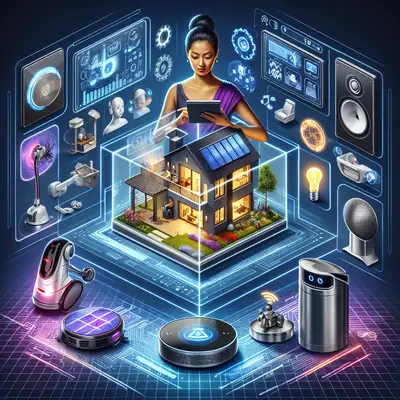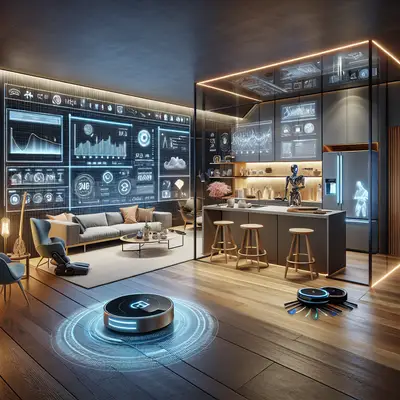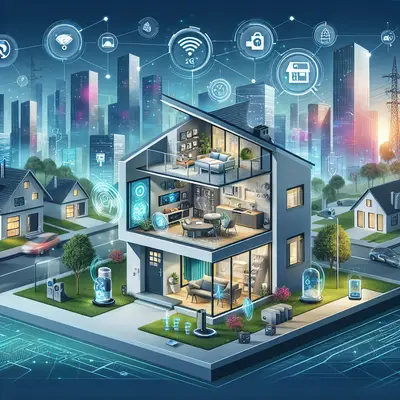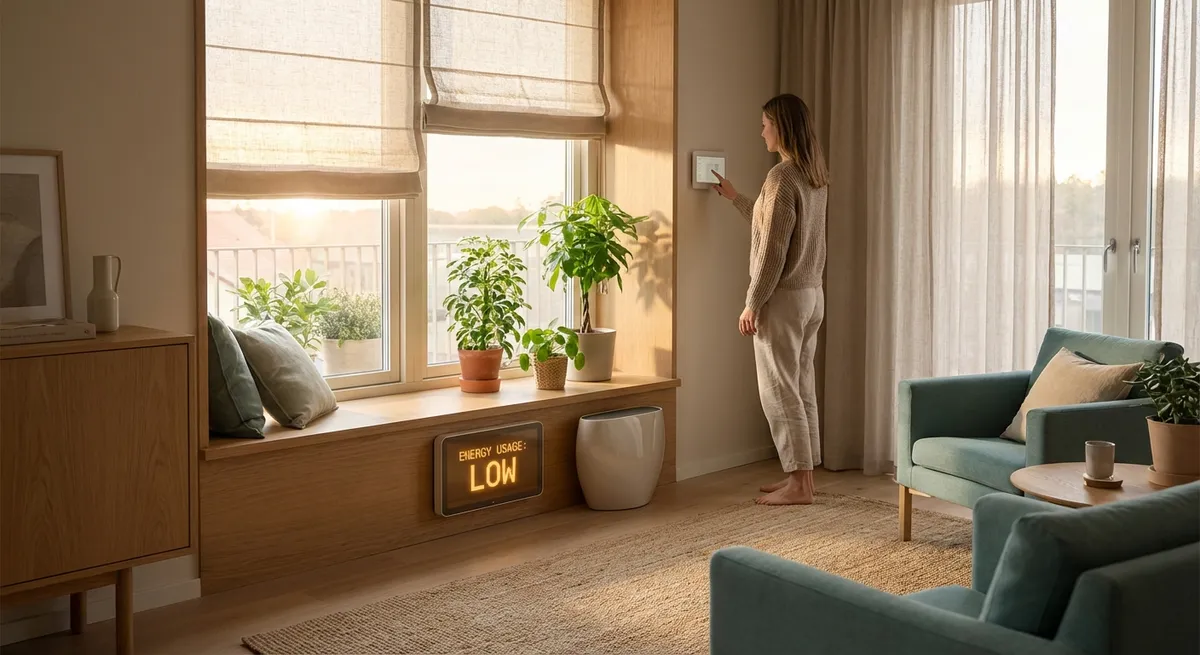
The most interesting homes right now aren’t just “smart” — they’re intuitive. They learn your patterns, reduce friction in your day, and quietly protect your time, energy, and budget. Think less about filling rooms with gadgets and more about building a living ecosystem that responds to you.
This is about designing a smart habitat: a home that understands how you move, what you care about, and where your attention actually needs to go. Here are five innovative, lifestyle-first ideas modern homeowners are leaning into right now — with tech that feels considered, not chaotic.
Adaptive Lighting That Follows Your Mood, Not Just a Schedule
Smart bulbs and connected switches are baseline. The new move is adaptive lighting that shifts based on time of day, your habits, and even what you’re doing in the moment.
Instead of a harsh “on/off” experience, your home becomes a series of scenes that support your energy: warm, dim light as you unwind, fresh daylight tones when you’re tackling deep work, and soft motion-activated pathways for late-night kitchen trips. The tech blends into your routines — sensors, smart switches, and voice control — but the goal is feeling better in your space, not showing off a device.
A practical setup might include circadian lighting (automatically adjusting color temperature throughout the day), scene presets (like “Focus,” “Dinner,” or “Reset”), and room-by-room motion sensors. Tie these into your smart assistant so “I’m home” doesn’t just unlock a door; it activates a lighting story that matches your evening.
The result: your home gently tells your body what time it is, nudging you into better sleep, sharper mornings, and a calmer wind-down — without you touching a single switch.
Micro-Zones: Turning One Home Into Many Lifestyles
Open floor plans are great for light and flow, but they’re not designed for how we actually live: taking calls, working out, relaxing, hosting, parenting — often in the same space. Micro-zoning uses smart tech to carve invisible “rooms” inside a larger area, each with its own vibe and function.
Picture this: your living-dining space behaves differently depending on what you’re doing. When you start a work call from the dining table, your smart speaker automatically drops ambient noise, your blinds tilt to reduce screen glare, and the light over the table switches to a bright, cool white. When the call ends and you hit “Movie,” the lights dim, the side lamps warm up, the thermostat nudges a degree lower, and the TV switches to your streaming profile.
You can create zones with smart plugs, lighting scenes, smart vents or mini-split controls, and soundscapes. A corner reading nook gets its own lamp automation and soft audio; a workout zone triggers fans, upbeat playlists, and stronger lighting when you tap “Start.”
Instead of buying more space, you’re teaching your existing home to be more flexible — tailoring micro-environments to the way your day actually unfolds.
Kitchen Intelligence: Quiet Upgrades That Save Time and Waste
The smartest kitchens right now don’t feel like sci-fi labs. They feel like an extra pair of hands that remembers what you never do: expiry dates, preheating times, and what’s already in the fridge.
Connected appliances can auto-adjust cooking times, suggest recipes based on what you have, and even send alerts if a burner is left on. But the real lifestyle shift comes from how these pieces work together. Imagine your oven preheating when your calendar says “Dinner at 7,” your range hood turning on automatically when it senses steam, and your fridge nudging you to use that produce before it goes sad and forgotten in the back drawer.
Smart inventory tools — from app-connected labels to camera-enabled fridges — help you waste less food and money. Induction cooktops add safety and control, especially for busy households, while smart dishwashers can run when energy prices are lowest.
Layer all that with a simple voice routine — “Let’s cook” — that cues your playlist, sets the lights to bright, and pulls up your saved recipe on a smart display. The kitchen shifts from “effort” to “flow,” making cooking at home feel both elevated and easier.
Wellness-First Spaces: Air, Sound, and Sleep on Autopilot
Wellness at home is no longer just about a pretty diffuser or a yoga mat in the corner. Smarter homes are beginning to behave like low-key wellness assistants — regulating air quality, noise, and light so your baseline feels calmer.
Start with air: smart air purifiers and HVAC systems with connected filters monitor pollutants, humidity, and temperature in real time. If outdoor air quality drops or pollen spikes, windows close, purifiers ramp up, and your phone quietly gets a heads-up. You don’t think about it — your home does.
Sound is another layer. Smart speakers and sound machines can adapt to your schedule, subtly masking street noise or neighbor sounds at night, then easing you into the morning with gradual audio instead of a jarring alarm. Pair that with blackout smart shades that rise slowly and warm-tinted lights that brighten like sunrise, and your bedroom becomes a sleep-and-wake system, not just a place to drop your phone.
Bathrooms are getting wellness upgrades too: heated smart floors on cold mornings, humidity sensors that kick on ventilation before mirrors fog, and mirrors with integrated lighting presets for nighttime vs. daylight grooming. These moves might feel small, but they stack into a home that naturally supports better recovery, focus, and calm — especially when the outside world feels loud.
Seamless Security That Protects Without Feeling Paranoid
Old-school home security felt like fortressing yourself in. The new era is more about quiet confidence — knowing your space is safe without turning your house into a full-blown command center.
Modern smart security blends in: discreet cameras with privacy shutters, doorbells that offer clear views without looking intimidating, and smart locks that let you share temporary access codes for guests, cleaners, or deliveries. The magic move is customizing alerts so you’re not glued to your phone every time a leaf blows across your porch.
Set your system to recognize familiar faces (where laws allow), ignore known pets, and prioritize only what matters: doors left unlocked, unexpected motion at odd hours, or a smoke alarm triggered when you’re away. Tie this into your lighting so certain events — like someone approaching late at night — trigger pathway lights or porch illumination rather than just a notification.
For families or shared homes, activity logs can replace constant check-ins: you’ll see that kids got home, the dog walker came by, or the package was dropped off, without needing group texts. Smart security done well isn’t about living in fear; it’s about freeing up mental space because the basics are handled.
Conclusion
Smart homes used to be about collecting gadgets. Now, the conversation is shifting to how your space actually feels to live in. Adaptive lighting that respects your rhythm, micro-zones that stretch every square foot, kitchens that cut waste and stress, wellness-led automation, and security that quietly has your back — together, they build a home that thinks with you, not just for you.
The goal isn’t a house that’s constantly “on.” It’s a calm, responsive habitat that lets you focus on what makes life feel full: people, projects, rest, and the small daily rituals that make home feel like your favorite place to be.
Sources
- U.S. Department of Energy – Connected Lighting – Overview of how connected and adaptive lighting can improve comfort and efficiency
- Harvard Medical School – Blue Light Has a Dark Side – Explains how light impacts sleep and circadian rhythms, supporting adaptive lighting choices
- EPA – Indoor Air Quality – Details why monitoring and improving air quality at home matters for health
- Consumer Reports – Smart Kitchen Appliances Guide – Breaks down current smart kitchen trends and features
- Federal Trade Commission – Using Smart Home Devices Safely – Guidance on privacy, security, and best practices for connected home tech
Key Takeaway
The most important thing to remember from this article is that this information can change how you think about Smart Homes.