There’s a new kind of home tech energy right now: less “look at my gadgets,” more “my space just…works.” The best setups don’t shout “smart home” at you—they quietly remove friction from your day, dial up comfort, and make your place feel more you. If you’re past the phase of random devices that don’t talk to each other and ready for a home that feels soft-automated (smart, but not stressful), these ideas are where to start.
Below are five innovative home living moves that feel elevated, intuitive, and actually worth building your routine around.
1. Mood-Based Lighting That Follows You, Not a Schedule
Forget basic “on at 7, off at 11” automation. Modern lighting can track how you feel and what you’re doing—then subtly adjust to match.
Think: warm, dim light when you’re winding down, bright and cool when you’re chopping vegetables, and soft focus lighting when you’re deep in laptop mode. This can be done with smart bulbs or switches connected to sensors and simple routines:
- Motion sensors in hallways and bathrooms that trigger low-level night lighting
- Color temperature shifting throughout the day to support your circadian rhythm
- Voice or app “modes” like Dinner, Deep Work, or Sunday Reset that control multiple rooms at once
The sweet spot: a combination of automations and quick-tap “scenes” so you’re not constantly talking to your lights. Once you live with lighting that adapts to time of day, season, and activity, basic on/off switches feel like stepping back in time.
2. A Hybrid “Command Corner” Instead of a Cluttered Smart Hub
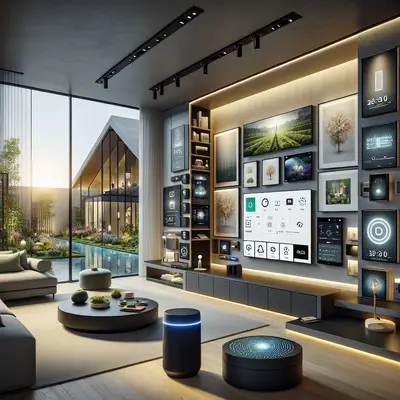
Rather than scattering devices everywhere, a small, intentional “command corner” can anchor your home tech without screaming “control center.”
Picture a compact setup in the kitchen, entryway, or living room that includes:
- A small display (tablet or smart display) for calendars, timers, and quick controls
- A wireless charging pad tray for phones, earbuds, and smart rings
- A sleek dock for keys and wallets with built-in tracker tags inside
- A hidden cable box or under-shelf strip to keep everything visually clean
This is where you:
- Check household reminders, deliveries, and weather at a glance
- Adjust music, lighting, and temperature without hunting for your phone
- Drop your devices to recharge as you walk in the door
It feels more like a mini lifestyle station than a control panel—especially if you style it with a plant, a coffee table book, or framed photo so it blends with your decor instead of looking like a tech altar.
3. Adaptive Climate That Knows Your Patterns (Not Just Your Thermostat)
We’ve moved beyond “smart thermostat and done.” The new tier of comfort is a layered climate system that learns how you actually live.
Instead of simply setting a temperature, think about:
- Zonal comfort: Smart thermostat plus smart vents or room sensors, so your bedroom, office, and living room each get their own microclimate
- Smart fans that auto-adjust speed based on room temperature and humidity
- Connected blinds or shades that close themselves during intense afternoon sun to keep your home cooler
- Air quality monitors that trigger purifiers or alert you when it’s time to ventilate
The goal is a home that quietly adapts around you: the bedroom cools before you normally go to sleep, the living room brightens and warms before your morning coffee, and you don’t have to constantly tweak the thermostat.
In a world of working from home and hybrid schedules, comfort isn’t a luxury—it directly impacts your focus, sleep, and mood. A climate that adjusts proactively rather than reactively feels surprisingly premium.
4. Invisible Audio: Sound That Blends Into Your Space
Home audio doesn’t have to look like a studio setup to sound good. The most livable version is almost invisible—audio that lives in your space without dominating it.
Some ways to do it:
- Build a multi-room speaker system where each room has one discreet speaker (or soundbar) instead of a tangle of devices
- Use voice or app controls to move sound from room to room as you go about your day—podcasts in the kitchen, music in the living room, white noise in the bedroom
- Opt for speakers that double as decor: lamp-speaker combos, fabric-front soundbars, or bookshelf speakers that actually look like design objects
- Create shared playlists or “home soundtracks” for routines: Sunday Clean, Dinner with Friends, Focus Mode, Morning Ease-In
When the audio is consistent and easy to shift around your home, it becomes part of the architecture of your day—not just something you remember when you’re bored. Hosting also feels more relaxed when the vibe is already built in.
5. Chore Tech That Quietly Clears Your Mental Load
The most underrated home tech is the kind you barely think about—but would absolutely miss if it stopped working.
You don’t need every gadget, but a few carefully chosen pieces can remove entire categories of micro-decisions:
- A robot vacuum that runs when you leave or during specific windows, mapped to avoid cords and pet bowls
- A smart dishwasher or laundry setup that can be started or checked from your phone, with notifications that nudge you before things sit too long
- Smart plugs or outlets for “forgetful” devices like irons, curling irons, or space heaters, so you can double-check from anywhere
- Connected leak sensors near water heaters, washing machines, or under sinks to catch problems before they become disasters
This is less about laziness and more about cognitive load. When your space is quietly handling small tasks—or at least reminding you at the right moment—you get more bandwidth for everything else: work, creativity, family, or just actual rest.
Conclusion
Modern home tech isn’t about filling your place with gadgets; it’s about creating a home that backs you up without demanding attention. Mood-based lighting, a thoughtful command corner, adaptive climate, invisible audio, and no-drama chore tech all share one core idea: less friction, more ease.
If a device doesn’t make your day feel smoother, calmer, or more intentional, it’s probably not worth the space or the setup. Start with the one area where your daily routine feels the most clunky—lighting, climate, sound, or chores—and layer in tech that feels like an upgrade to your lifestyle, not just your Wi‑Fi.
Sources
- U.S. Department of Energy – Lighting Choices to Save You Money – Explains how different lighting types and controls impact comfort and efficiency
- ENERGY STAR – Smart Thermostats – Overview of how smart climate control can improve comfort and reduce energy use
- Harvard Health – Blue Light Has a Dark Side – Covers how light and color temperature affect sleep and circadian rhythm
- Consumer Reports – Best Smart Home Devices – Independent reviews of smart home tech, including vacuums, speakers, and hubs
- Wirecutter (New York Times) – How to Build a Smart Home Without Getting Overwhelmed – Practical guide to choosing and integrating smart devices in a way that fits real life
Key Takeaway
The most important thing to remember from this article is that this information can change how you think about Home Tech.