Home doesn’t really have “rooms” anymore—just zones that shift as fast as your day does. Your dining area is a WFH desk by 10am, a studio by 4pm, and a dinner party backdrop by 8pm. Instead of fighting that reality, the smartest interiors are leaning into it.
This is about designing a home that feels fluid: pieces that do more than one job, spaces that flex with your mood, and small design moves that quietly make your life feel easier, calmer, and more you.
Below are five innovative home living ideas that modern homeowners are gravitating toward—and how to make them work in your space.
1. The “Soft Office” You Can Put Away
The hard-edged home office is out. The “soft office”—a workspace that disappears when you’re off the clock—is in.
Think less corporate, more calm:
- Swap a chunky desk for a slim console or wall-mounted desk that can double as a vanity or entry table.
- Use a dining chair you actually like visually as your desk chair to keep the look cohesive.
- Tuck office gear into design-first storage: lidded baskets, sideboards with doors, or a media unit with a hidden tech bay.
- Layer in wellness cues—soft lamp instead of a harsh overhead, greenery at eye level, and a fabric pinboard instead of a metal grid.
Design trick: Anchor your “soft office” with a rug that also works for living or dining. During work hours it zones the space; after hours it just reads as cozy, not corporate.
Why it works for modern living: You keep the function of a dedicated workspace, but visually your home still feels like, well, a home—especially important in smaller apartments and open-plan layouts.
2. Modular Social Spaces That Expand on Demand
Instead of one big sofa locked into a single layout, modular seating lets your living room switch personalities: movie night, group hang, solo reading, even occasional guest bed.
How to build it out:
- Choose low-profile modular sofas or loungers that can be separated, rotated, and reconfigured.
- Mix in a couple of small accent tables instead of one large coffee table—they can float between seats or move to the side when you need floor space.
- Use lightweight poufs or floor cushions for “overflow seating” that stores under consoles or in corners when not in use.
- Keep a neutral base palette for your larger pieces and change the vibe seasonally with throws, cushions, and art.
Layout strategy: Start with your preferred “everyday” configuration, then pre-plan two alternates: a conversation circle and a screen-facing layout. Take photos of each setup so they’re easy to recreate before guests arrive.
Why it works: Your living room stops being a fixed set and becomes a kit—adaptable, responsive, and way more social-media-ready when you want to switch things up.
3. Sensorial Layers: Designing for Sound, Scent & Light
Modern interiors aren’t just about how spaces look; they’re about how they feel to all your senses. Thoughtful sensory design can make a basic apartment feel like a boutique stay.
Key layers to play with:
- Sound: Add fabric-heavy elements—rugs, curtains, upholstered headboards—to soften echo and city noise. Consider a small speaker tucked into a shelf to set an intentional soundtrack for different times of day.
- Scent: Use scent “zoning”—a bright citrus or herbal diffuser in the kitchen, something woodier or warmer in the living area, and a softer, powdery or linen scent in the bedroom.
- Light: Layer overhead lights with floor lamps, table lamps, and under-cabinet lighting. Aim for warm-color bulbs in evening spaces and slightly cooler, brighter light in work zones.
Design move: Put at least one light source at three different heights in your main living space (overhead, eye-level, low). You’ll end up with a much more cinematic feel in the evenings.
Why it works: When sight, sound, and scent line up with what you’re doing—winding down, working, hosting—your home starts to feel less random and more intentionally curated, even if the furniture is simple.
4. Display with Intention: Curating Your “Daily Gallery”
Instead of spreading decor all over every surface, modern interiors are moving toward tighter, more intentional “vignettes” or mini galleries that tell a story.
How to create a daily gallery that feels personal, not staged:
- Pick one or two anchor spots—like a sideboard, floating shelf, or console table—to be your main display zones.
- Mix heights: stack books, add a taller vase or sculpture, then a small, unexpected object (stones, travel finds, ceramics).
- Include something living—a plant cutting in water, fresh herbs in a small jar, or a small potted plant.
- Rotate pieces seasonally or whenever you bring something new home, instead of just adding more and more.
Advanced tip: Think of each display like an Instagram carousel in real life—cohesive, but with visual variety. Stick loosely to one color temperature (all warm tones or all cool tones) to avoid visual noise.
Why it works: You keep surfaces functional and clean, but still get that lived-in, interesting feel that looks good on camera and feels good IRL.
5. “Wellness Corners” Instead of Full-Blown Home Gyms
You don’t need a dedicated gym room to build a home that supports your body and brain. Wellness corners are smaller, more flexible, and easier to maintain.
Ideas for different types of wellness corners:
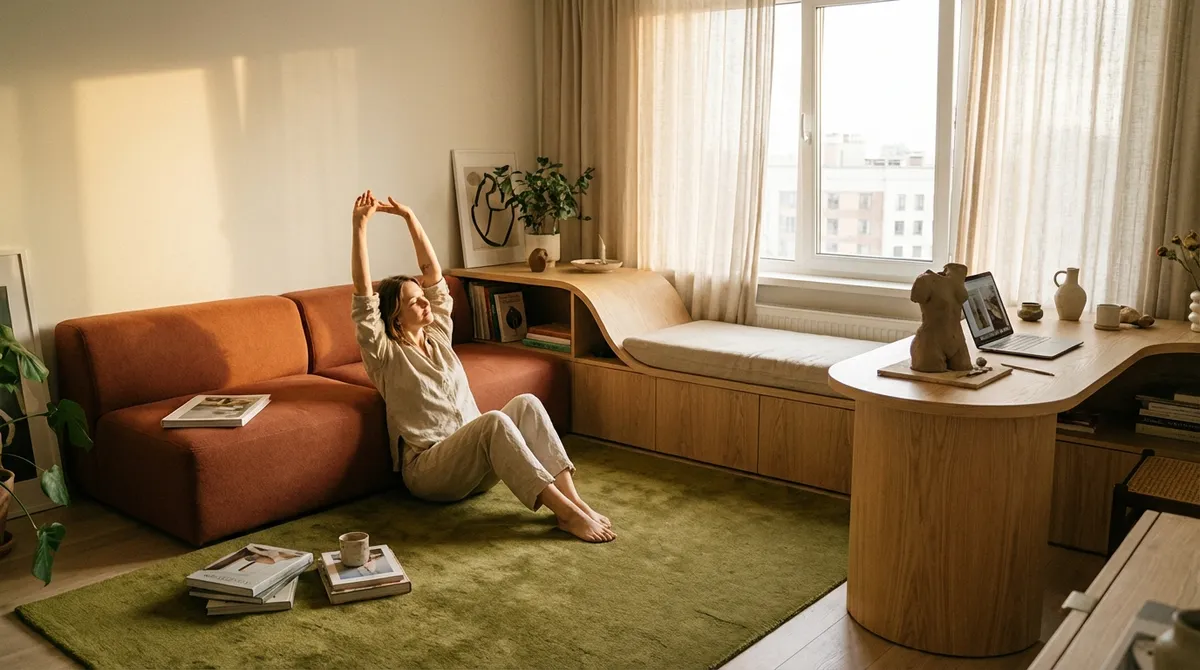
- Movement nook: A mat, a low basket for resistance bands and yoga blocks, and a wall hook for a jump rope. Place near natural light if you can.
- Reset corner: A lounge chair or floor cushion, small side table, soft lamp, and a basket for books, journal, or headphones.
- Sleep ritual zone: In your bedroom, create a mini ritual station with a carafe of water, a small tray for nighttime essentials, a warm-tone bedside lamp, and blackout curtains or an eye mask within reach.
Design trick: Use a single bold element—a sculptural chair, a textured wall hanging, or a saturated paint color behind the nook—to visually “claim” that corner as special, even if it’s just taking up one square meter.
Why it works: You’re building micro-moments of care into your layout. When wellness is physically easy to access, it becomes mentally easier to choose—especially during busy weeks.
Conclusion
The most interesting homes right now aren’t the biggest or the most maximal—they’re the ones that move with you. Soft offices that vanish at 6pm. Seating that expands when your people show up. Corners that remind you to breathe, stretch, or log off.
You don’t have to renovate to get there. Start with one zone: make your workspace softer, your living room more modular, or carve out a small wellness corner. As you layer in these ideas, your space starts doing what modern life demands—bending, flexing, and quietly supporting what you actually do at home all day.
Sources
- Harvard T.H. Chan School of Public Health – Health and Well-Being in Green Buildings – Research on how design elements like light, air quality, and layout impact comfort and well-being at home
- American Society of Interior Designers (ASID) – 2023 Trends Outlook – Insights on evolving residential design trends, including flexible and wellness-oriented spaces
- International WELL Building Institute – Mind Concept – Framework for how interior environments can support mental health and daily rituals
- New York Times – How to Make a Room Feel More Cozy – Practical tips on layering lighting, texture, and decor for comfort
- IKEA Life at Home Report – Global insights on how people are actually living and working at home, and what they want from their spaces
Key Takeaway
The most important thing to remember from this article is that this information can change how you think about Interior Design.