There’s a new kind of modern happening at home—and it’s less “showroom perfect,” more “real life, but elevated.” Think softer edges, hidden functionality, and spaces that flex with your day instead of demanding a full redesign every season. If you’re craving a home that feels current without chasing every micro-trend, this is your lane.
Below are five innovative ideas that tap into how we actually live now—more hybrid, more digital, more home-centered—without losing that calm, considered aesthetic.
Tactile Minimalism: Less Visual Noise, More Texture
Minimalism isn’t about empty rooms anymore; it’s about editing visuals and layering feels. Tactile minimalism keeps the clean lines but softens the vibe through texture and material instead of clutter and decor.
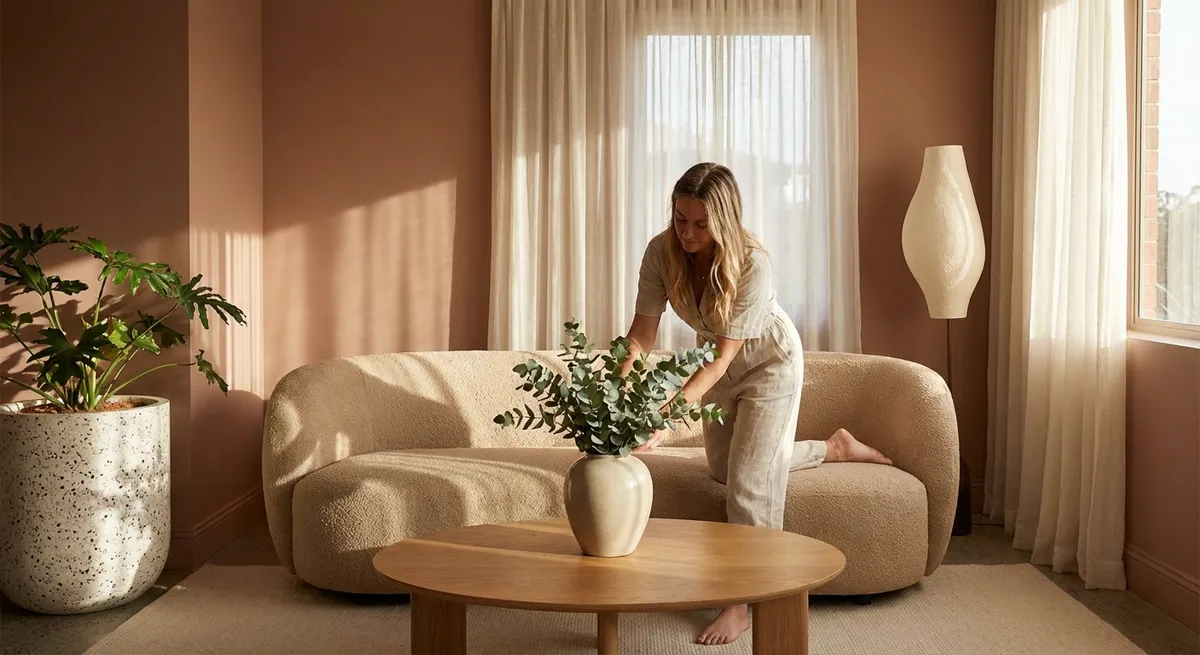
Think matte walls with slubby linen curtains, boucle or felt on accent chairs, and chunky knits instead of busy patterns. Keep your big pieces simple—sofa, rug, storage—but let the materials do the talking. A low-profile sofa in a nubby fabric, a stone or limewashed side table, and a wool rug instantly create warmth without adding extra “stuff.”
Color-wise, choose a tight palette (three to four shades) and play with depth: warm whites, oat, mushroom, and one deeper accent like espresso or charcoal. This keeps your space feeling calm on camera and in real life—ideal for Zoom calls, content creation, or just a less chaotic brain.
Pro tip: When buying anything new, ask yourself: “Am I adding function, or just adding visual noise?” If it doesn’t earn its place, skip it and invest in something texturally richer instead.
Zoned Living: Designing for Your Real Daily Rhythm
Traditional floor plans didn’t plan for hybrid work, home workouts, and FaceTimes with friends all happening in the same square footage. Zoned living is about micro-areas that support your actual habits—even in small spaces.
Instead of thinking in “rooms,” think in “zones”:
- A focus corner with a compact desk, plug-in wall sconce, and a noise-softening rug for work.
- A recovery nook near a window with a chair, footstool, and a small tray for tea or a book.
- A drop zone by the entry with hooks, a tray for keys, and a closed basket for shoes or bags.
- A movement pocket—even just a yoga mat and foldable bench—so workouts don’t require full furniture rearrangement.
Use visual cues to define zones: a different rug texture, a change in wall color, or a narrow console that subtly divides space. The goal isn’t to rigidly segment your home, but to create intuitive “destinations” that support your day, so your space works harder without feeling crowded.
Hybrid Lighting: Treat Your Home Like a Mood Board
Lighting is the unsung hero of modern interiors—and the difference between “looks fine” and “wow, your place feels amazing.” Hybrid lighting layers three types of light: ambient (overall), task (focused), and accent (vibe).
Instead of relying on a single ceiling fixture, think of your lighting like styling a photo shoot:
- Ambient: dimmable ceiling fixtures or track lighting to set the base level.
- Task: a swing-arm lamp by the sofa, an under-cabinet kitchen strip, or a focused desk lamp.
- Accent: wall washers, picture lights, or a small lamp on a shelf to create depth.
Use smart bulbs or app-based dimmers (even basic ones) to shift between “work mode,” “dinner mode,” and “slow-evening mode” without thinking too hard. Warmer temperatures (2700–3000K) in the evening help your brain downshift, while cooler light (3500–4000K) in work zones keeps things crisp.
Bonus detail: Add at least one “glow” element—like an LED strip behind a headboard or under a floating console. It makes nighttime feel cinematic and instantly elevates even a simple setup.
Display With Intention: Curated Surfaces, Not Chaotic Shelves
Modern interiors lean away from “everything I own on every surface.” Instead, they treat open space as part of the design. The trick is to curate, not cram.
For shelves and consoles, think in small, styled moments:
- Stack a few design or photo books horizontally, with a candle or small sculpture on top.
- Pair a taller object (vase, ceramic, plant) with a lower, wider one to create balance.
- Leave negative space—empty shelf sections are not a failure; they’re breathing room.
Rotate what’s visible by season or mood: photos, travel finds, or one standout piece of art instead of a dozen small frames. Use closed storage (drawers, boxes, cabinets) for everything that doesn’t need to be seen daily.
If you love personality and color, pick a zone where you “turn up the volume” (like a gallery wall or one statement shelf) and let the rest of the room stay quieter. This keeps your overall space feeling modern and intentional, not visually exhausting.
Flexible Furniture: Pieces That Shift With Your Life
Today’s most innovative living idea isn’t a gadget; it’s furniture that refuses to be just one thing. Flexible pieces help your home evolve with you—hosting friends, working from home, or resetting your layout without a full redesign.
Look for:
- Expandable tables that go from solo dinner to group hangout with hidden leaves.
- Stacking or nesting stools that act as side tables, extra seating, or plant stands.
- Modular sofas with movable ottomans you can reconfigure for lounging, movie night, or guests.
- Slim benches that slide under consoles or windows and pull out when people come over.
- Storage ottomans or coffee tables with hidden compartments so remotes, blankets, and devices disappear when you want a clean slate.
In small homes, multi-use furniture is your biggest design hack. Instead of filling walls with more stuff, invest in pieces that adapt: a media console that doubles as a work zone, a bar cart that becomes a tea cart or zoom-station, a sideboard that hides tech chaos but looks sculptural from the outside.
Modern living is less about square footage and more about adaptability. The more your furniture can pivot with you, the more “expensive” and considered your space looks and feels—even if the pieces themselves are budget-friendly.
Conclusion
Modern interior design isn’t about chasing the latest trend; it’s about building a home that fits your real life, looks good on your worst day, and can flex as your routines shift. Tactile minimalism, zoned living, layered lighting, curated surfaces, and flexible furniture aren’t just aesthetic choices—they’re lifestyle tools.
Start with one idea—maybe rethinking your lighting or carving out a true focus corner—and let the rest evolve over time. When your home is designed around how you live (not how a catalog says you should), “modern” stops being a look and becomes a feeling: calm, current, and completely yours.
Sources
- Harvard Graduate School of Design – The New Dynamics of Home – Insight into how homes are evolving with new lifestyle patterns
- American Lighting Association – Layered Lighting Basics – Explains ambient, task, and accent lighting in residential spaces
- MIT Senseable City Lab – Living in an Adaptable Home – Research focus on adaptable spaces and flexible design concepts
- The New York Times – How to Declutter, Step by Step – Practical guidance on editing belongings and curating surfaces
- Parsons School of Design – Interior Design Resources – Overview of contemporary interior design thinking and principles
Key Takeaway
The most important thing to remember from this article is that this information can change how you think about Interior Design.