There’s “smart home” in the sales brochure sense… and then there’s a home that actually backs you up in real life. Not a sci-fi showroom, not an over-automated circus—just quiet, well-designed tech that makes weekday mornings smoother, nights calmer, and your space feel pulled together. This is about future living that feels lived-in: intuitive tools, subtle upgrades, and a home that feels more like a co-pilot than a project.
Ambient Intelligence: A Home That Reads the Room (Literally)
Instead of shouting at a smart speaker, ambient intelligence lets your home pick up on what’s happening and adjust itself in the background.
Think multi-sensor systems that notice when you’re up for the day and gently ramp lighting from warm to cool, start the coffee, and nudge the thermostat before you even reach for your phone. Presence sensors (not just basic motion detectors) can tell the difference between an empty room and someone quietly reading on the sofa, so lights don’t awkwardly switch off mid-chapter.
Modern platforms can:
- Tie lighting, music, climate, and blinds to time-of-day “moods”
- Use occupancy and temperature sensors to only heat or cool rooms in use
- Recognize patterns—like when you usually go to bed—and pre-set a “wind-down” scene
The lifestyle win: instead of tapping through apps, your home leans into your routines. It’s the difference between “controlling” a smart home and just living in one that quietly gets you.
Zoned Comfort: Micro-Climate Living Without the Energy Guilt
Whole-home temperature battles are outdated. Zoned comfort tech lets you treat your home like a series of micro-climates, so no one is sweating in the kitchen while freezing in the bedroom.
Beyond traditional HVAC zoning, modern homeowners are layering in:
- Smart vents that open/close automatically to redirect air where it’s needed most
- Room-by-room smart thermostats or smart radiator valves in older homes
- Ceiling fans and connected shades that sync with your climate system to reduce energy use
Some systems even pull in real-time weather data, adjusting based on incoming sun, humidity, or a cold front rolling in. For anyone working from home, this means your office can be perfectly dialed in without heating or cooling unused spaces all day.
The lifestyle win: comfort stops being an argument and becomes a setting. Your reading chair, your home office, your bedroom—all can have their own “just-right” temperature profile without feeling wasteful.
Wellness-Forward Spaces: Tech That Takes Your Home’s Pulse
Wellness at home is shifting from scented candles to actual data. Air quality sensors, circadian lighting, and smart water devices are turning homes into low-key wellness hubs.
Forward-thinking homeowners are leaning into:
- Indoor air quality monitors that track particulate matter, VOCs, and humidity, and can trigger purifiers or fans automatically
- Circadian lighting setups that shift color temperature through the day to support sleep, focus, and relaxation
- Smart water filtration and leak detection, so you know both what you’re drinking and what’s happening behind the walls
Paired together, these tools turn your home into more than a backdrop—it becomes an active guardian of your daily health. You get alerts if the air quality dips during cooking, suggestions to ventilate, and lighting that naturally pulls you out of “staring at screens at midnight” mode.
The lifestyle win: your space starts working with your body instead of against it, turning everyday living into something subtly restorative instead of draining.
Hybrid Work Habits: Turning Corners Into Clever, Connected Studios
The home office is no longer a temporary setup; it’s part of the floor plan. Tech is evolving from “just a desk” to compact, genuinely efficient work zones that don’t hijack your entire living room.
Modern, work-ready homes are experimenting with:
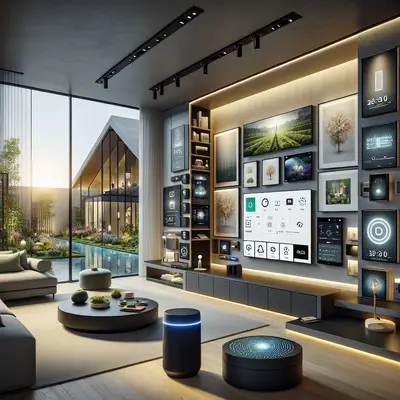
- “Disappearing” setups: wall-mounted screens that double as art displays when not in use
- Acoustic zoning with smart sound panels or noise-masking devices to carve out focus-ready corners
- Dedicated Wi‑Fi zones or mesh systems that prioritize bandwidth where you actually work
- Smart desks and chairs that remember preferred height and posture settings
The magic is in blending in: a dining nook that transforms into a conference-ready space with a single scene change (lighting, blinds, and noise control), then resets for dinner. No bulky, corporate vibes—just clean, flexible design backed by solid tech.
The lifestyle win: your home flexes between “life mode” and “work mode” on demand, without sacrificing style or sanity.
Curated Experiences: Scene-Based Living Instead of Gadget Clutter
The most modern homes aren’t the ones with the most gadgets; they’re the ones where everything works together. Scene-based living is all about bundling devices into single, intentional moments.
Instead of 15 different apps, you get named experiences like:
- “Slow Morning”: soft lighting, warm color temperature, lowered blinds, chill playlist, coffee machine on standby
- “Out for the Night”: lights off, doors locked, security armed, climate adjusted, unnecessary outlets powered down
- “Movie In”: bias lighting behind the TV, surround sound dialed in, notifications silenced, curtains closed
Behind the scenes, this might involve smart plugs, connected shades, lighting scenes, audio zones, and even appliance controls—but what you interact with is a single tap or voice cue. The focus shifts from “look at this device” to “step into this vibe.”
The lifestyle win: your home stops feeling like a collection of tech and starts feeling like a set of tailored experiences, switching gears with you throughout the day.
Conclusion
Future-ready home tech isn’t about turning your place into a showroom; it’s about designing a space that knows you, backs your routines, and quietly upgrades your everyday. From ambient intelligence to micro-climates, wellness tracking to scene-based living, the next wave isn’t louder—it’s more intentional.
When the tech disappears into the flow of your day but your life feels smoother, calmer, and more “you,” that’s when your home is genuinely modern.
Sources
- U.S. Department of Energy – Thermostats and Control Systems – Overview of smart thermostats, zoning, and energy-efficient climate control
- EPA – Guide to Air Cleaners in the Home – Explains indoor air quality concerns and how monitoring and filtration improve health
- Harvard T.H. Chan School of Public Health – Healthy Buildings – Research on how indoor environments impact wellness, productivity, and daily life
- National Institute for Occupational Safety and Health (NIOSH) – Working from Home – Covers ergonomics and design considerations for home workspaces
- Lighting Research Center, Rensselaer Polytechnic Institute – Circadian Light – Scientific background on circadian lighting and its effects on sleep and health
Key Takeaway
The most important thing to remember from this article is that this information can change how you think about Home Tech.