There’s a new wave of smart living that’s less “look at my gadgets” and more “my home just…gets me.” It’s not about filling every room with screens; it’s about tech that fades into the background while your life feels smoother, calmer, and a little bit luxe. If you’ve been smart-curious but turned off by cluttered hubs and blinking lights, this is the softer, more design-forward side of smart homes.
Below are five innovative ideas that make your space feel considered, not complicated—and still totally photo-ready for your feed.
Sensory Scenes: Lighting That Matches Your Mood, Not Just Your Schedule
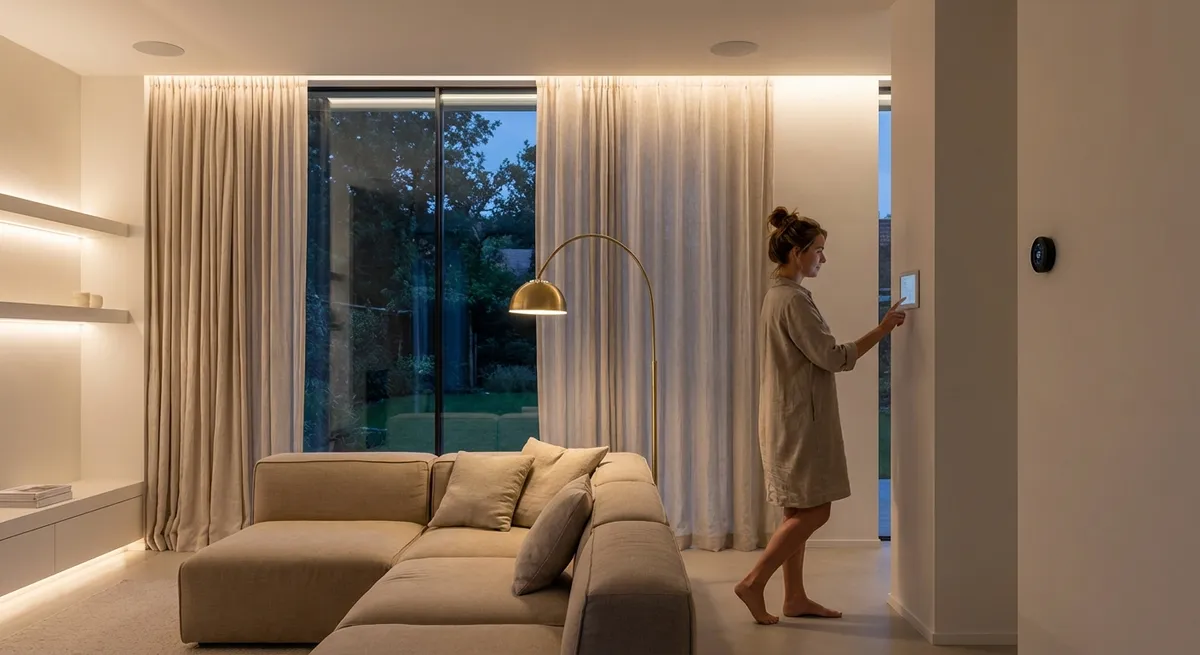
Smart lighting has moved beyond “on at 7, off at 11.” The new version is all about sensory scenes—subtle lighting setups that support how you actually feel, and how you want your space to feel.
Imagine your lights shifting from cool white in your home office during focus hours to warm, candle-like tones in the living room as your day winds down. Motion sensors in hallways and bathrooms mean no harsh blasts of overhead light at 2 a.m.—just a soft, low-level glow that guides you. You can even sync lighting to sunrise and sunset so your home naturally tracks with the day instead of fighting it.
For design lovers, smart bulbs and switches now come in minimalist, decor-friendly finishes, so you can keep your wall plates clean and cohesive. No spaceship vibes, just subtle upgrades that you control with a tap, a voice command, or a quiet, pre-set routine. It’s less about “Hey Google” and more about: “My home already did it.”
Kitchen on Autopilot: Appliances That Think While You Cook
The smartest kitchens now act like a quiet sous-chef—anticipating what you’ll need and smoothing over the little frictions of everyday cooking.
Smart ovens can scan barcodes or follow built-in recipes, automatically adjusting temperature and cook time so you’re not hovering with a timer. Fridges with internal cameras let you check what you’re low on from your phone while you’re at the store, and some can suggest recipes based on what’s already inside (helpful when you’ve got random ingredients and zero brain space).
Connected dishwashers and ranges can ping your phone when they’re done or need attention, so you’re not constantly checking. For small-space or design-focused homes, there are now induction cooktops with integrated ventilation that keep sightlines clean and surfaces minimal, while still connecting to your smart system.
All of this means: less mental load, more creative energy. Your kitchen becomes less “task station” and more easy, everyday restaurant-at-home—minus the chaos in the background.
Zoned Comfort: Climate Control That Knows How You Actually Live
Instead of one thermostat trying to guess what every room needs, newer smart climate setups understand that your life happens in zones. Your bedroom wants to be cooler at night. Your office gets afternoon sun. Your living room is where everyone gathers in the evening.
Smart vents, connected thermostats, and room-by-room sensors can work together to direct heating and cooling where it’s actually needed. That means fewer hot/cold fights, fewer wasted energy bills, and a home that feels consistently comfortable without you constantly adjusting settings.
Pair this with smart shades or blinds that respond to sunlight, and your home can quietly lower heat gain during summer afternoons or capture warmth on winter days. The result is a space that feels stable and considered: no stuffy upstairs, no chilled-to-the-bone office, just a balanced backdrop for whatever your day looks like.
Entry, Elevated: Frictionless & Secure Arrivals (For You and Your People)
Your front door is where design, security, and convenience all collide—so it’s one of the easiest places to make your smart home feel instantly more elevated.
Video doorbells and smart locks are now sleek enough to blend in with a modern exterior. You can set up temporary codes for guests, dog walkers, or cleaners, and revoke them when you’re done—no spare keys floating around. Package deliveries can be monitored from your phone, and some setups even allow secure drop-offs inside a foyer or garage without giving full access to the entire home.
For multi-unit buildings or townhomes, many systems now integrate with intercoms and shared-entry solutions, letting you see who’s calling in real time from anywhere. Inside, a slim, well-designed hub or tablet near the door can become your “home status” dashboard—who’s in, which lights are on, what’s open, what’s locked.
The upgraded experience: you walk in hands-free, lights ease on, your preferred playlist starts low in the background, and you never wonder if you locked the door. Your entry feels less like a barrier and more like a curated welcome.
Quiet Wellness: Air, Sound, and Sleep on Smart Support
Wellness at home is going beyond yoga mats and diffusers. The latest smart moves are about the invisible layers that shape how you feel day-to-day: air quality, sound, and sleep.
Compact air quality monitors can now track pollutants, humidity, and even CO₂ levels, triggering air purifiers, fans, or HVAC systems only when needed. This helps maintain a fresher-feeling space without machines humming full-time. Integrated systems can also alert you if humidity levels creep into mold-friendly territory or if ventilation needs a boost during gatherings.
Sound-wise, discreet smart speakers and soundbars can double as white-noise machines at night, ambient music sources during work hours, and full speaker setups during movie nights. Many can adapt sound levels based on time of day, so your home stays calm instead of constantly loud.
For sleep, smart blinds, tunable bedside lamps, and connected alarms can work together to nudge you into a more consistent rhythm—gradually dimming at night and slowly brightening in the morning. Some mattresses and sleep trackers integrate with your thermostat to fine-tune bedroom temperature for better rest.
The thread through all of this: your home quietly supports your health in the background, so you can enjoy the foreground.
Conclusion
Smart homes don’t have to feel like tech demos. The most modern version is soft, intuitive, and deeply personal—a space where the tech disappears into design and routine, but the benefits are obvious every day.
When you think about upgrades, start with how you want your home to feel: calmer, smarter with energy, easier to host in, better for sleep. Then layer in lighting, climate, entry, and wellness features that align with that vision. The goal isn’t a “futuristic house”; it’s a home that feels like it’s keeping up with the life you’re actually living now.
Sources
- U.S. Department of Energy – Energy Saver: Smart Thermostats - Overview of how smart and programmable thermostats can improve comfort and reduce energy use
- EPA – Indoor Air Quality Basics - Explains why indoor air quality matters and how monitoring and filtration can help
- Harvard T.H. Chan School of Public Health – Lighting and Health - Research-based insight into how light affects sleep and circadian rhythms
- Consumer Reports – Guide to Smart Appliances - Independent overview of smart ovens, fridges, and other connected kitchen devices
- FTC – Internet of Things and Privacy/Security - Guidance on privacy and security considerations for connected home devices
Key Takeaway
The most important thing to remember from this article is that this information can change how you think about Smart Homes.