Sustainable living isn’t about moving to a cabin, giving up your favorite streaming services, or turning your home into a science project. It’s about small, smart shifts that make your space feel calmer, more considered, and future-proof—without killing your aesthetic. Think: softer bills, softer footprint, soft-luxe energy. Here are five innovative ideas that modern homeowners are quietly weaving into their spaces right now.
1. The “Library Fridge” Mindset: Cooling That Wastes Less, Looks Better
There’s a new wave of kitchen design that treats the fridge less like a black hole and more like a curated shelf—clean lines, clear zones, and tech that actually helps you waste less.
Modern, sustainable tweaks:
- Column and under-counter fridges instead of one huge box, so you’re only cooling what you really use. Great for smaller households or people who eat fresh.
- Drawer fridges for snacks, drinks, or produce—perfect near an island or living room for easy access and fewer door openings.
- Smart cooling zones that keep food fresher for longer with precise humidity and temperature control.
- Transparent organization: glass containers, labels, and “eat first” bins cut down on food waste—and make your fridge feel like a boutique grocery case.
Sustainability benefit: Less food waste (which lowers your carbon footprint), more efficient cooling, and appliances sized to your real life instead of outdated norms. Plus, a streamlined fridge setup is a flex every time you open the door.
2. Everyday Rituals, Powered by the Sun
Solar has shifted from “techy roof panels you never think about” to a lifestyle upgrade people design around. It’s not just about panels anymore—it’s about what they enable.
Modern, lived-in solar looks like:
- Solar + battery backup so crucial circuits (Wi-Fi, fridge, a few outlets, maybe AC in one room) stay on in outages—huge for peace of mind.
- EV-focused setups, where your car is basically a mobile battery. You top up at home, and some newer systems even let your car power parts of your home.
- Solar pergolas and carports that double as architectural features, giving shade and power at the same time.
- Smart energy dashboards that show when your home is generating the most—so you can time laundry, dishwashers, or charging for peak “free” energy.
Sustainability benefit: You’re directly cutting your reliance on fossil-fuel power, and if you have a battery, you’re smoothing out demand on the grid. Bonus: there’s something psychologically grounding about knowing your hot shower or morning coffee came from your own roof.
3. Bio-Based Interiors: Materials That Age Gracefully, Not Poorly
The next wave of “eco” isn’t just about what’s recycled—it’s about materials that feel good to touch, wear in (not out), and don’t off-gas a chemical soup into your living room.
Design-forward, low-impact materials to watch:
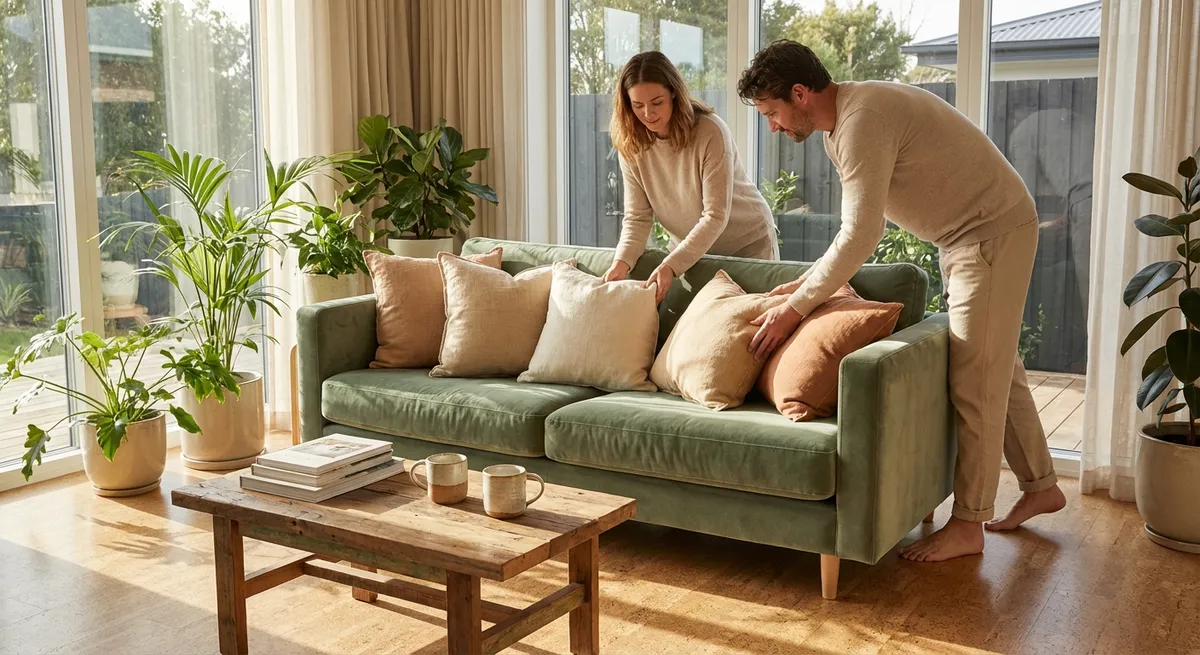
- Cork flooring: Soft underfoot, sound-absorbing, naturally insulating, and harvested without killing the tree. It brings a warm, gallery-like vibe.
- Bamboo and fast-growing woods: Great for cabinetry, shelving, and paneling when you want a clean, minimal look that’s still renewable.
- Limewash and clay paints: Matte, textured wall finishes that use fewer synthetics and give that timeless, European apartment feel.
- Wool, jute, and organic cotton textiles: Rugs, throws, and upholstery that breathe better and avoid microplastic shedding.
- Low-VOC finishes and adhesives: Invisible but crucial—help keep indoor air healthier without sacrificing style.
Sustainability benefit: You’re choosing materials with lower embodied carbon and fewer harsh chemicals, while creating a tactile, calm aesthetic that actually improves with age instead of looking tired in a few years.
4. “Water-Aware” Design That Still Feels Lush
Water-wise homes used to scream “desert landscaping” and gravel everywhere. Now, the look is much more curated and soft—think Mediterranean courtyard or minimalist spa.
Ways homeowners are making water efficiency feel elevated:
- Zoned landscapes: Lush, high-water plants near entrances/patios where you feel them most; tougher, drought-tolerant species farther out.
- Smart irrigation systems that use weather data and moisture sensors to avoid overwatering (and overpaying).
- Rain chains, rain gardens, and permeable pavers that turn stormwater into a feature instead of runoff—visually interesting and practical.
- High-efficiency fixtures (showerheads, faucets, dual-flush toilets) with modern designs that don’t look eco—just sleek.
Sustainability benefit: You reduce strain on local water supplies, lower your bills, and help manage stormwater more intelligently. The end result feels curated and intentional, not “we turned off the sprinklers and gave up.”
5. Smart Comfort: Micro-Zones Instead of Blasting the Whole House
Heating and cooling are some of the biggest energy drains in a home. The new approach is less “set one temperature for everything” and more “create tiny comfort bubbles where you actually live.”
How people are rethinking comfort:
- Room-by-room climate control with smart vents or mini-splits, so bedrooms can be cooler, living spaces warmer, and guest rooms set back.
- Radiant floor heating in key zones like bathrooms or basements—lower air temps, same comfort level.
- High-performance window coverings (cellular shades, layered curtains) programmed to block heat in the day and keep it in at night.
- Air-quality-first setups: Heat pump systems, energy recovery ventilators (ERVs), and smart monitors that track CO₂, humidity, and particulates, then adjust airflow automatically.
Sustainability benefit: You use energy only where it genuinely improves your comfort while often upgrading your air quality. It feels like living inside a well-designed microclimate instead of wrestling with a single thermostat.
Conclusion
Sustainable living at home isn’t about perfection or aesthetics that scream “eco.” It’s about designing a space that quietly does more with less: less waste, less stress on the grid, less maintenance—and more comfort, more calm, more longevity.
Start with one zone—maybe your kitchen organization, your next flooring project, or your water use outside—and layer from there. The most sustainable homes aren’t curated in one big makeover; they’re built decision by decision, upgrade by upgrade, into places that feel grounded, current, and genuinely good to live in.
Sources
- U.S. Department of Energy – Efficient Appliances and Equipment – Data on how modern appliances and smart usage reduce home energy consumption
- U.S. Energy Information Administration – Residential Energy Consumption – Stats on where energy is actually used in homes (heating, cooling, appliances, etc.)
- U.S. Environmental Protection Agency – Food Waste Basics – Information on food waste impacts and how better storage and habits reduce waste
- EPA WaterSense – Saving Water at Home – Guidance on water-efficient fixtures and landscaping approaches
- Harvard T.H. Chan School of Public Health – Household Air Pollution – Insights on indoor air quality, VOCs, and healthier material/ventilation choices
Key Takeaway
The most important thing to remember from this article is that this information can change how you think about Sustainable Living.