If your home doesn’t quite match the life you’re living now, you’re not alone. Modern living has shifted—more hybrid work, more time at home, more intention behind what we buy and how we use space. Interior design has followed, moving away from “showroom perfect” toward spaces that feel lived-in, flexible, and quietly elevated. This is about homes that work hard behind the scenes but still feel soft, human, and personal.
Below are five innovative home living ideas that speak to how people actually live now—practical, design-forward, and made to evolve with you.
1. Zoned Living: One Room, Multiple Personalities
Open-plan sounded dreamy until we all started working, working out, and winding down in the same space. Zoned living fixes that without rebuilding walls. The idea: one room, several “micro-environments” that serve different parts of your day.
Think of your living room as a layout story instead of one big furniture blob. A low-profile sofa and rug can anchor the “conversation zone,” while a slim console table behind the sofa doubles as a work perch with a laptop and a task lamp. A lounge chair angled toward a window becomes a reading corner with its own side table and floor lamp. Visual cues—rugs, lighting, and changes in material (linen vs. leather, warm wood vs. stone)—quietly separate these zones without shutting them off.
This kind of planning lets smaller homes feel generous. You’re not just placing furniture; you’re scripting how you want to live from morning coffee to late-night streaming. The key is circulation: leave clear paths between zones so the room feels open, not crowded.
2. Tactile Minimalism: Less Stuff, More Feeling
Minimalism has matured. It’s no longer about stark white spaces and cold surfaces—it’s about editing what you own so what remains actually feels good to be around. Tactile minimalism prioritizes touch as much as sight: fewer objects, richer textures.
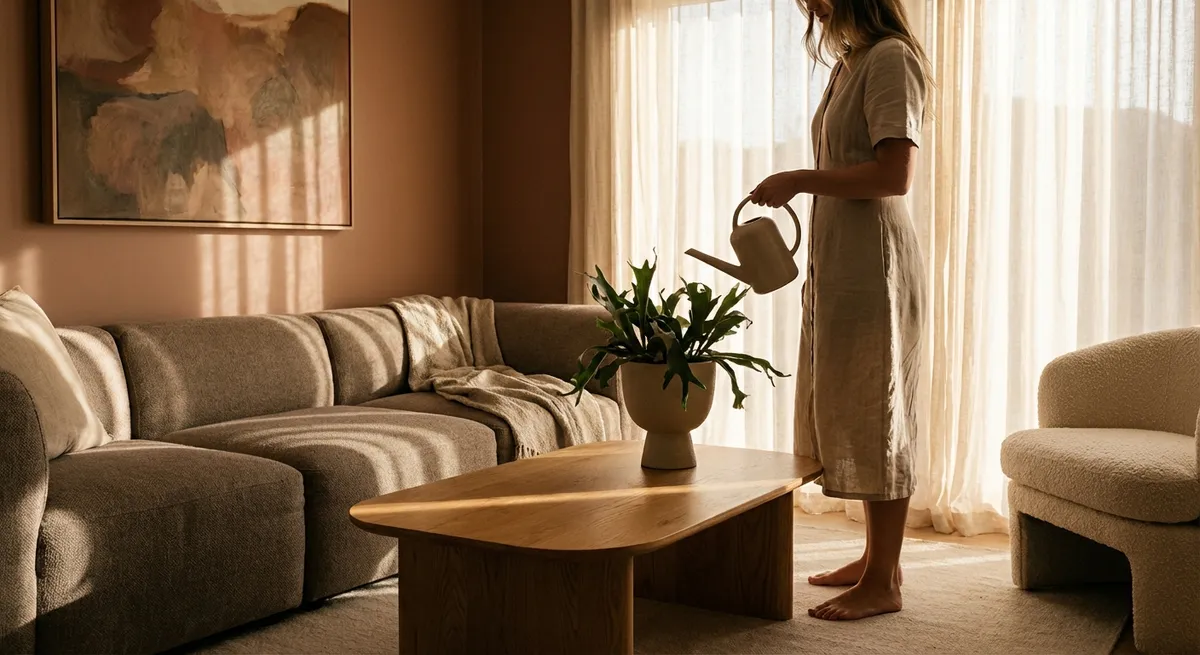
Start with your most used surfaces: sofa, bed, dining chairs, and the flooring underfoot. If the overall palette is neutral, layer in texture so it doesn’t feel flat—bouclé or linen upholstery, washed cotton bedding, a wool or jute rug, matte ceramic pieces on a wood table. The color story can stay calm (think soft taupe, chalky white, warm sand, muted charcoal) while the mix of textures keeps the room visually and physically interesting.
Storage becomes part of the design language. Closed cabinets hide visual clutter, while a few open shelves or ledges display intentionally chosen pieces: a stack of books you actually read, handcrafted pottery, a sculptural lamp. The result is a home that feels edited but not empty—light on clutter, heavy on comfort.
3. Hybrid Work Corners That Don’t Look Like Offices
The new luxury is not a dedicated home office; it’s a workspace that can disappear when you’re off the clock. Instead of trying to squeeze in a bulky desk, think about transforming underused nooks into good-looking, low-visual-noise work zones.
A wall-mounted desk or shallow console in the living room or bedroom can hold a laptop and notebook without dominating the space. Choose pieces that look like furniture, not corporate equipment: a wooden chair with upholstered seat instead of a typical office chair, a design-led task lamp, a framed print above instead of a corkboard. A closed box or basket can hide cords and chargers when not in use.
Lighting is crucial. Natural light is ideal for daytime, but layer in a warm, focused task light so you’re not stuck with ceiling glare on video calls. When the workday ends, close the laptop, slide your chair back under, maybe drop a plant or a book on the desk—instantly it reads as a styled console rather than “the office.” Your space mentally shifts back to home mode, which is just as important as aesthetics.
4. Biophilic Touches: Bringing Nature In Without Going Full Jungle
You don’t need to turn your living room into a greenhouse to feel the benefits of nature indoors. Biophilic design is about subtle, repeated cues from the natural world—light, materials, shapes—that can calm the nervous system and make spaces more restorative.
Houseplants are the obvious start, but be strategic: one large statement plant (like a fiddle-leaf fig, rubber plant, or olive tree) often looks more intentional than many tiny pots scattered everywhere. Pair that with a small herb setup in the kitchen and a trailing plant on a shelf, and you’ve got a strong but manageable green presence.
Then go beyond plants. Bring in natural textures and forms: a wood dining table with visible grain, woven baskets for storage, stone or clay accessories, linen curtains that move with the air. If your light is limited, focus on nature-inspired colors and prints—soft greens, warm browns, landscape art, or organic patterns in textiles. The goal is to create small, easy-to-maintain “nature moments” that break up the hard lines of modern living.
5. Ambient Layers: Designing With Light, Not Just Lamps
Lighting has moved from utility to mood-setting tool, and it’s one of the fastest ways to make a home feel considered. Instead of relying on a single ceiling fixture, think in layers: ambient, task, and accent lighting working together.
Ambient lighting is your base—soft, overall illumination from dimmable ceiling lights or large floor lamps. Task lighting targets what you do: a focused lamp near your reading chair, a strip light under kitchen cabinets, a small desk lamp where you work. Accent lighting is the mood-maker: a warm LED strip behind the TV, a tiny spotlight on art, candles or candle-style LEDs on a coffee table.
Color temperature matters. Warmer light (around 2700K–3000K) tends to feel cozy and flattering in living spaces and bedrooms, while slightly cooler neutral white can be nice for kitchens or work surfaces. Smart bulbs and plugs let you tweak brightness and color on your phone or via voice, making it easy to shift from “daytime focus” to “evening unwind” in seconds—no renovation required, just better choices.
Conclusion
Modern interior design isn’t about chasing trends; it’s about designing your home around how you actually live right now—and how you want to feel in your space. Zoned rooms, tactile minimalism, hybrid work corners, subtle biophilic touches, and layered lighting all work together to create homes that are flexible, calm, and quietly personal.
You don’t have to overhaul everything at once. Start with one idea—a better work corner, more intentional lighting, or a bolder use of texture—and let the rest build slowly. The most modern homes today aren’t perfect; they’re evolving, lived-in, and designed to support real life.
Sources
- Harvard T.H. Chan School of Public Health – The 9 Foundations of a Healthy Building - Explores how factors like light, air quality, and layout impact health and well-being indoors
- American Society of Interior Designers (ASID) – 2024 Trends Outlook - Insight into current interior design and lifestyle trends shaping modern homes
- Environmental Protection Agency (EPA) – Indoor Air Quality - Discusses the impact of indoor environments, including materials and plants, on air quality
- Cornell University – Lighting, Productivity and Health - Research-backed guidance on how lighting influences comfort, mood, and performance at home and work
- Royal Horticultural Society – Houseplants for Health and Wellbeing - Evidence-based look at the benefits of incorporating indoor plants into living spaces
Key Takeaway
The most important thing to remember from this article is that this information can change how you think about Interior Design.