Sustainable living isn’t just for off-grid cabins and compost-obsessed minimalists anymore. It’s quietly sliding into the mainstream of modern design—think soft neutrals, clean lines, warm lighting, and choices that lower your footprint without killing your vibe. If you love a home that feels curated, calm, and current, there’s a new wave of eco-conscious moves that look more “boutique hotel” than “backyard science project.”
Below are five innovative ideas that blend sustainability with style, comfort, and that subtle sense of “my life is together” energy.
1. Bio-Based Materials That Age Beautifully, Not Badly
The next generation of “eco” isn’t rough jute rugs and splintery reclaimed wood; it’s bio-based materials that feel elevated and intentionally designed.
Think limewash paint that gives your walls a soft, matte, almost cloud-like texture while using fewer synthetic chemicals than many conventional paints. Or cork flooring that’s warm underfoot, naturally sound-absorbing, and far more forgiving on your joints than tile. Mycelium-based decor (yes, made from mushrooms) is starting to show up in everything from acoustic panels to sculptural lamps, turning science-lab innovation into actual conversation pieces.
Choosing these materials isn’t just an aesthetic move. Many bio-based options store carbon, reduce reliance on petroleum, and often perform better on indoor air quality than standard finishes. The vibe is less “eco statement,” more “where did you get this?”—quietly better for the planet, surprisingly better for your senses.
2. The Circular Home: Buy Once, Design Forever
Instead of constantly “refreshing” with fast furniture, more homeowners are designing their spaces like capsule wardrobes: fewer, better pieces that can flex as life shifts.
Modular sofas with replaceable covers and detachable sections mean your seating can adapt from city loft to family house without starting over. Dining tables with changeable legs or expandable tops morph from WFH desk to dinner-party central. Timeless metals (like stainless steel and solid brass) and real wood can be refinished and repaired instead of replaced.
The circular mindset also shows up in how you shop: vintage lighting rewired with LED bulbs, pre-loved designer chairs with new upholstery, solid-wood dressers that outlive trends but can be updated with hardware. This approach lowers waste, reduces demand for new raw materials, and gives your home a layered, lived-in character that can’t be ordered straight out of a catalog.
3. Low-Impact Comfort: Climate Control That Feels Custom
Instead of blasting heating or cooling through your entire home, the new sustainable luxury is “micro-comfort”—creating exactly the environment you want, exactly where you are.
Zoned systems and smart radiators let you heat or cool only the rooms you’re actually using, while high-performance curtains, cellular blinds, and well-chosen textiles help stabilize temperatures naturally. Energy-efficient ceiling fans create that soft, resort-style breeze and can make your space feel up to 4°F cooler without leaning on the AC as hard.
Radiant floor heating powered by efficient boilers or heat pumps shifts the focus from hot air (which rises and disappears) to gentle, even warmth where you feel it most. Paired with good insulation and properly sealed windows, your home starts to feel less “drafty box” and more “calm capsule,” all while cutting energy use in the background.
4. Kitchen Rituals That Quietly Cut Waste
The most lived-in room of the house is often the most wasteful—but it’s also where subtle shifts can have huge impact without feeling performative.
Built-in or under-sink compost systems make food scraps disappear into a clean, contained process instead of guilt-inducing trash bags. Sleek countertop containers designed for composting feel more like design objects than chores. Induction cooktops are becoming the new status appliance: faster, safer, more energy efficient, and better for indoor air quality than gas.
On the storage side, glass containers, beeswax wraps, and silicone bags replace endless disposable plastics while actually making your fridge look more curated. You start planning meals around what you already have (because you can see it), which means less food waste and fewer last-minute takeout orders. Sustainable kitchen habits stop being “rules” and become part of a daily rhythm—intentional, but not intense.
5. Small-Scale Urban Nature: Green Spaces That Actually Fit Your Life
Not everyone has room (or time) for a full garden, but micro-nature is having a moment—and it can be surprisingly functional.
Balcony herb rails, vertical planters, and slim raised beds turn tight outdoor zones into mini edible landscapes. Indoors, hydroponic or smart grow systems tuck into corners, giving you fresh greens under LED grow lights that sip electricity. Even if you’re not aiming for full-on self-sufficiency, growing a few high-impact favorites (basil, cilantro, mint, salad greens) reduces plastic packaging, transport emissions, and those sad, wilted herbs in the back of the fridge.
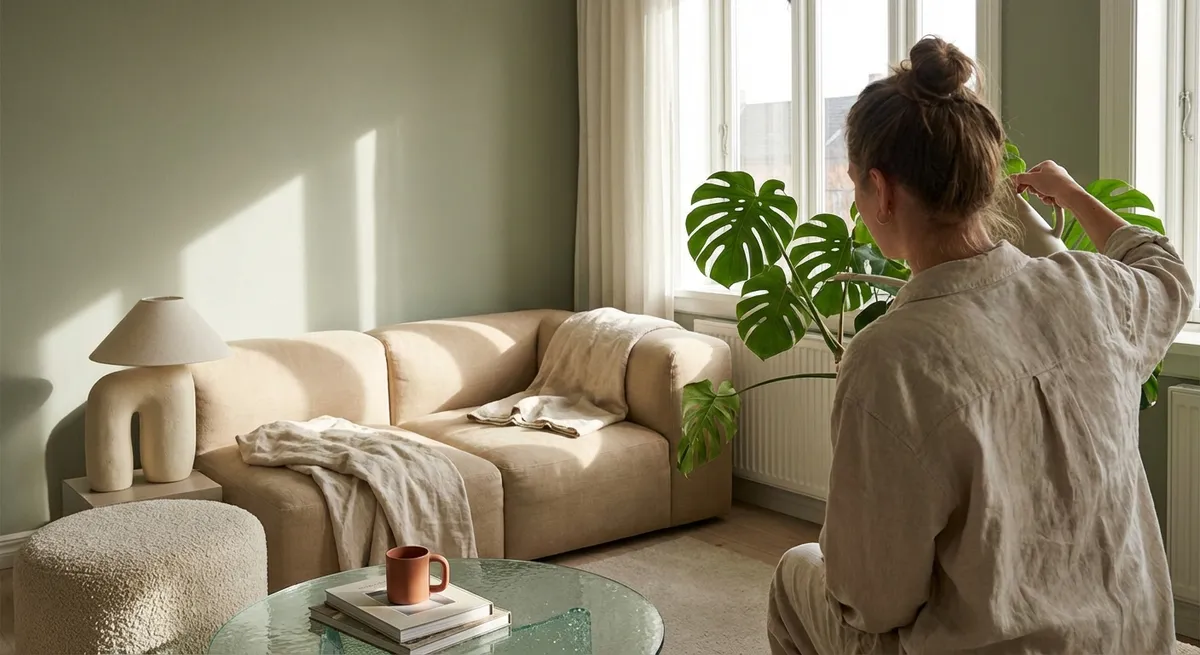
Layer in air-purifying plants, moss wall art, or a tiny indoor tree to soften hard edges and improve your mental well-being. The result is a home that feels more alive—and a subtle nudge toward cooking more, ordering less, and staying connected to the natural world even in the middle of the city.
Conclusion
Sustainable living doesn’t have to look like a total lifestyle overhaul or a Pinterest-perfect, zero-waste experiment. It can feel like a series of smart, design-forward decisions: materials that age well, furniture that adapts, comfort that’s precise instead of wasteful, kitchen rituals that simplify your week, and pockets of nature that fit your square footage.
The sweet spot is where your home feels more like you—calmer, cleaner, more intentional—while also quietly using less, wasting less, and lasting longer. That’s the new version of “green”: not loud or preachy, just deeply well designed.
Sources
- U.S. Environmental Protection Agency – Sustainable Materials Management - Overview of strategies for reducing environmental impacts through smarter material use and circular approaches
- U.S. Department of Energy – Energy Saver: Heating & Cooling - Guidance on efficient climate control, including zoning, insulation, and equipment choices
- Harvard T.H. Chan School of Public Health – Indoor Air Quality - Research on how building materials, cooking methods, and ventilation affect health and comfort
- U.S. Department of Agriculture – Food Waste FAQs - Data and insights on food waste and how household habits influence it
- MIT Climate Portal – What Is a Circular Economy? - Explains the principles behind circular design and why durable, repairable products matter
Key Takeaway
The most important thing to remember from this article is that this information can change how you think about Sustainable Living.