Smart homes used to be all about flexing the latest gadget; now they’re about quiet upgrades that make your space feel more “you” and less like a showroom. Think lighting that matches your energy, routines that reset your brain after work, and spaces that adjust themselves before you even realize what you need. This isn’t about building a fully robotic house—it’s about layering in smart details that support how you actually live, move, and recharge.
Below are five innovative home living ideas that feel genuinely helpful, not overengineered—and that modern homeowners are actually using (and loving).
Mood-Based Lighting That Learns Your Rhythm
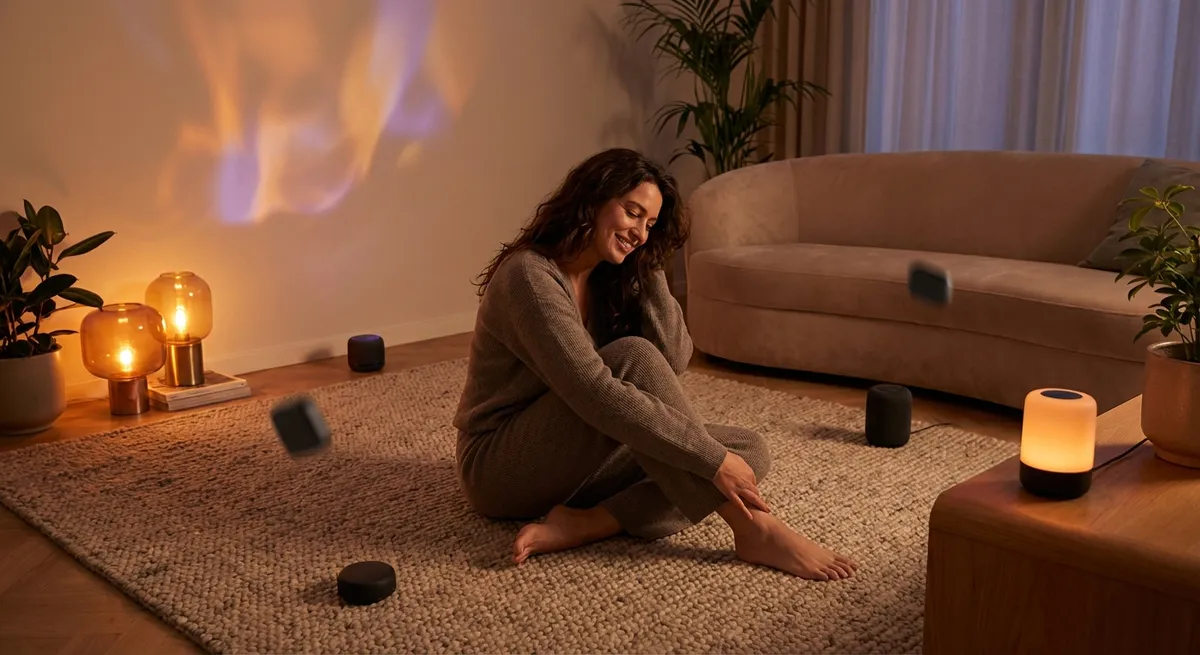
Most people stop at “smart bulbs” and call it a day. Mood-based lighting goes a level deeper: it learns your patterns and syncs with your body clock and lifestyle instead of just turning on and off from an app.
Start with smart bulbs or switches in your main zones—living room, bedroom, kitchen. Pair them with smart sensors or a hub that tracks time of day and presence, then build scenes around how you actually live: dim, warm lights for late-night scrolling; bright, cool tones for deep work; layered accent lights that switch on automatically for “hosting mode.” Many systems now include adaptive lighting that shifts color temperature throughout the day to mimic natural light, which can support better sleep and focus.
The magic is in making it feel seamless. Instead of shouting at a speaker every time you walk into a room, set triggers: lights fade up slowly when your alarm goes off, or they transition to soft amber when your TV turns on after 8 p.m. Over time, lighting becomes less about flipping a switch and more about shaping how your home feels—calm, focused, or social—without you thinking about it.
A Kitchen That Thinks Like a Sous-Chef
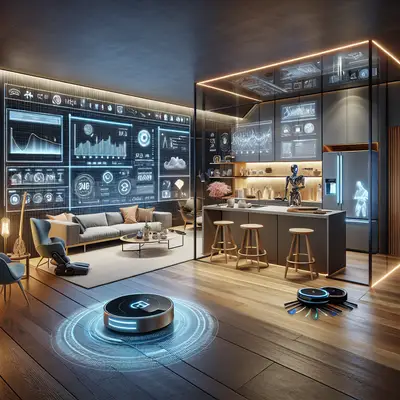
The kitchen is quietly becoming the smartest room in the house—not because everything has a touchscreen, but because the right devices are starting to work together like a small, invisible team.
Smart ovens can now recognize what you’re cooking and suggest temperature and timing; some even send a ping to your phone when dinner’s ready or when it’s time to flip something. Connected fridges track what you actually use, help you reduce food waste with expiration reminders, and can suggest recipes based on what’s inside. Add in a smart scale, voice-controlled display, or under-cabinet screen, and you can follow recipes hands-free while you cook.
The real upgrade is coordination. Imagine: your cooktop and range hood sync so ventilation kicks in automatically; your coffee maker starts when your bedroom lights begin to brighten; your dishwasher runs when energy is cheapest. Instead of a kitchen full of one-off gadgets, you get a cooking environment that pays attention, reacts, and quietly supports how you prep, eat, and host.
Spa-Grade Bathrooms With Subtle Smart Rituals
Bathrooms are moving from purely functional to slow-down zones, and smart tech is slipping in not as a gimmick, but as part of a daily ritual. Think: less neon mirror lights, more small luxuries that stack up over time.
Smart showers let you pre-set water temperature and pressure profiles—no more standing there adjusting knobs half-asleep. Some can be voice-activated or controlled from your phone, so the water’s ready when you are. Smart mirrors with built-in lights can adjust brightness and color temp for makeup, skincare, or winding down, and some even track air quality or humidity to help you avoid mold.
Add in underfloor heating on a schedule, a heated towel rail that turns on before your morning routine, or a Bluetooth ceiling speaker that quietly cues up a “wake up” playlist—and suddenly your bathroom isn’t just where you rush through getting ready. It becomes a controlled zone of light, sound, and comfort, tuned to how you like to start and end your day.
Zoned Living: Spaces That Shape-Shift Around You
Open-plan living is great until someone’s on a Zoom call, someone else is trying to relax, and a third person is blasting a workout playlist. Zoned smart living is the new move—using tech to let one space behave like several different rooms.
Smart thermostats can already control temperatures by room or area. Take that idea further: soundscaping speakers that play focus audio in your workspace while keeping the living area clear; smart blinds that block glare where you’re working but stay open where you’re lounging; lighting scenes that carve out a “home office” corner in your living room from 9–5, then fade into “movie night” mode by evening.
You can also use smart room dividers—think panels with integrated lighting, shelving, or acoustic materials—to visually and acoustically separate zones without building walls. Layer in presence sensors or routines, so your space automatically shifts as you move: work lights and noise-cancelling sound in your corner desk during work hours, then soft lamps and ambient music in your reading nook when you log off. The result is a home that adapts with you through the day instead of forcing you into one static layout.
A Subtle Wellness Layer Running in the Background
Wellness tech at home is moving beyond wearables and into the structure of the house itself. This isn’t about turning your living room into a gym; it’s about tiny, often invisible systems that support your body and brain while you just… live.
Start with air quality. Smart purifiers and HVAC systems can now sense particulates, pollen, and pollutants, adjusting automatically and letting you see real-time air quality data. Pair that with smart humidifiers or dehumidifiers that maintain an ideal range for sleep, skin, and breathing. Some systems also monitor CO₂ levels, nudging you to crack a window or triggering a ventilation boost to fight that mid-afternoon brain fog.
Then there’s light and sound. Circadian lighting can help regulate sleep by mimicking natural daylight patterns indoors, especially if you work from home or live in a small space with limited windows. Smart noise machines or sound-masking systems can create a consistent audio environment that makes it easier to focus or rest—even if the rest of the household is on a completely different schedule. Over time, these subtle layers add up to a home that quietly takes care of you in the background.
Conclusion
Smart homes are no longer about having the most futuristic gadget on the block—they’re about designing a space that feels intuitive, personal, and aligned with your actual life. When lighting, appliances, climate, and wellness features are soft-programmed around your routines, your home stops being a collection of devices and starts acting like a living system that knows you.
The move now isn’t to make your home louder or flashier. It’s to build in small, intelligent shifts—mood-aware lighting, zoned living, ritual-based bathrooms, quietly helpful kitchens, and an always-on wellness layer—that make every day run smoother, feel better, and reflect who you are.
Sources
- U.S. Department of Energy – Connected Thermostats and Devices - Overview of how smart and connected devices can improve comfort and energy efficiency at home
- Harvard T.H. Chan School of Public Health – The Effects of Indoor Air Quality on Health - Explains why air quality monitoring and purification at home matter for wellness
- Lighting Research Center – Circadian Lighting - Research on how light color and intensity impact sleep, alertness, and overall health
- Consumer Reports – Guide to Smart Appliances - Independent breakdown of smart kitchen and home appliances and how they’re actually useful
- National Institute of Building Sciences – Whole Building Design Guide: Indoor Environmental Quality - Technical but helpful overview of how lighting, sound, thermal comfort, and air quality interact in modern homes
Key Takeaway
The most important thing to remember from this article is that this information can change how you think about Smart Homes.