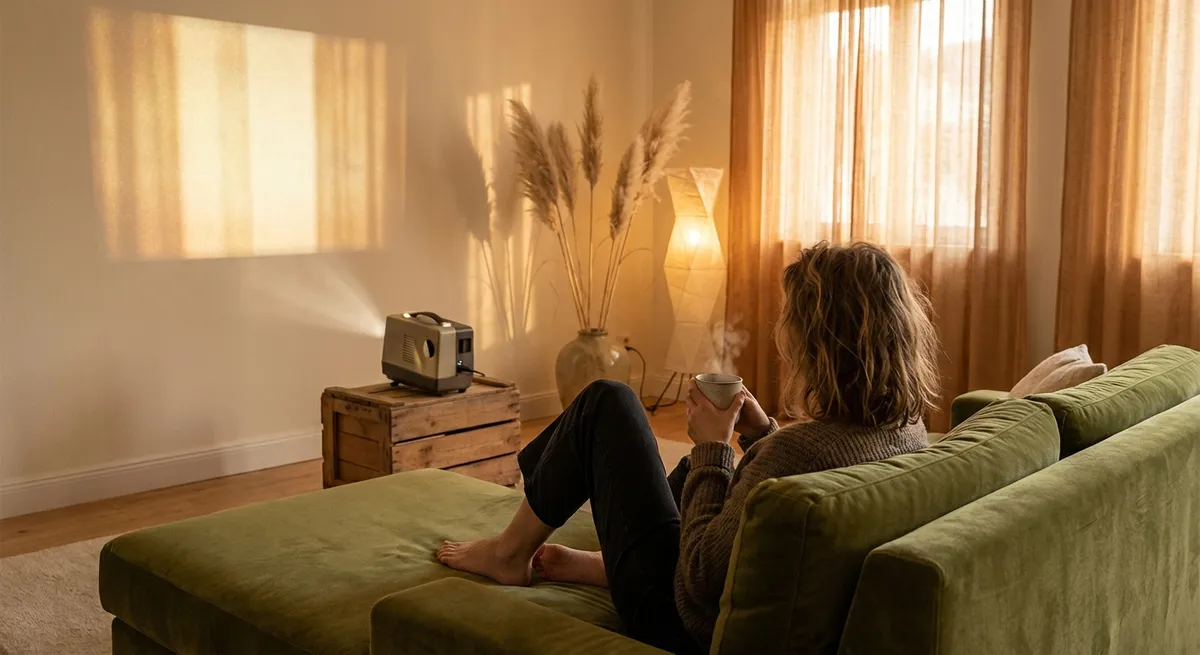
There’s a new kind of interior style quietly taking over: spaces that feel like a film still, but are actually built for real life. Less “showroom perfect,” more “main character energy on a Tuesday night.” It’s about rooms that flex with your routine, feel instantly calming, and still look good on camera. If your home needs a reset that goes beyond swapping throw pillows, these ideas lean into vibe, function, and a little bit of quiet drama.
Idea 1: The “Second Life” Living Room
Most living rooms are designed for guests you rarely have, not the life you live every day. A “Second Life” living room flips the script—built first for your actual habits, then styled for aesthetics.
Start by tracking how you really use the space for a week. Do you work from the sofa, stretch on the floor, binge shows, or scroll endlessly? Use those habits as your layout blueprint. That might look like a slim console table behind the sofa that doubles as a standing laptop zone, a low storage bench under the window that works as reading nook and clutter catch-all, or nesting side tables that pull in for laptop days and tuck away for movie nights.
Visually, keep the base pieces (sofa, rug, large storage) in a cohesive, calm palette, then layer personality with art, coffee table books, and sculptural lighting. The result: a room that photographs beautifully but feels like it’s on your side Monday through Sunday, not just pre–dinner party.
Idea 2: Micro-Zones Instead of One “Perfect” Room
Open-plan living is great for light and flow—but not when every activity competes in one echoey box. Micro-zoning breaks a larger area into function-first pockets without chopping it up with walls.
Use changes in texture and height instead of big dividers. A deeper, softer rug under the “conversation zone,” a woven runner to guide a walkway, a statement chair and floor lamp in a corner that instantly reads as a solo reading spot. Even in smaller apartments, a slim shelf unit can act as a loose divider—open storage that defines areas while still letting light travel through.
Lighting is where the magic happens. Give each zone its own light story: warm table lamps for lounges, a focused pendant over a dining table, a directional sconce or floor lamp by a reading chair. Each pocket should feel like it can stand alone as its own room, even if it’s sharing one big footprint.
Idea 3: Texture-First Styling (Not Color-First)
Color gets most of the attention, but texture is what makes a room feel expensive, layered, and quietly elevated—even if you’re working with budget pieces.
Start by choosing two to three hero textures to repeat throughout a space. Think: boucle or textured linen for softness, brushed metal or matte black for contrast, warm wood for grounding. The trick is to mix finishes within the same “family”—a pale oak coffee table, a slightly darker wood frame, a rattan accent—so the room feels collected, not matchy-matchy.
For textiles, layer smooth with nubby: linen curtains against a plaster-like painted wall, a flatweave rug under a chunkier throw, a sleek leather ottoman next to a soft, cloud-like sofa. This is also an easy way to make neutral interiors look rich: when color is quiet, texture does all the talking. In photos, these subtle shifts catch light in different ways, giving your home that “can’t quite pin it down but it looks good” mood.
Idea 4: Daily Ritual Corners (That You Actually Use)
Instead of designing one aspirational “perfect” room, build small, hyper-intentional ritual corners that support your real habits. These aren’t full zones—they’re tiny, curated spots that nudge you into better routines.
A ritual corner could be:
- A morning coffee station with a tray, your favorite mug, and a small lamp so the area glows before sunrise.
- A nightstand setup with a carafe, one good book, a soft-touch dimmer lamp, and a catchall so nothing piles up.
- A yoga/meditation corner with a low basket for mats, a small shelf or stool for a candle and speaker, and a textured wall hanging for acoustic softness and visual calm.
Keep these corners visually simple and repetitive: same tones, same textures, minimal clutter. The consistency builds muscle memory—your brain recognizes “this is where we wind down,” or “this is where we focus.” Over time, those small moments shape the entire vibe of your home life more than any one big furniture purchase.
Idea 5: Lighting Layers That Feel Like a Soundtrack
If your home only has one overhead light per room, it’s like listening to music on one flat speaker. Modern interiors come alive when you treat lighting like a soundtrack—layered, dynamic, and adjustable to match the “scene.”
Aim for three types of light in each main space:
- Ambient: your base layer—ceiling fixtures, track lighting, or large pendants. Go for warmer bulbs (around 2700–3000K) in living and bedroom areas to keep the mood soft.
- Task: focused light where you actually do things—under-cabinet lighting in the kitchen, a reading lamp by the sofa, a desk lamp with adjustable brightness.
- Accent: purely for mood—LED strips under shelves, a tiny lamp on a stack of books, a wall sconce that washes light up and down the wall.
Put as many fixtures as possible on dimmers or smart plugs so you can slide from “weekday functional” to “Friday night low light” with almost no effort. At night, try turning off overhead lighting entirely and using only lamps and accent lights; the way shadows fall can make a familiar room feel like a completely different, softer version of itself.
Conclusion
Designing a home that feels fresh right now isn’t about chasing trends or buying a whole new sofa set. It’s about creating spaces that move with you: rooms that are flexible, textured, subtly lit, and anchored in your actual routines. When you build micro-zones, layer texture, carve out ritual corners, and treat lighting like a soundtrack, your home stops being a backdrop and starts feeling like an experience—one that’s equal parts cinematic and completely livable.
Sources
- The New York Times – How to Make a Room Feel Cozy - Insights on using lighting, texture, and layout to create inviting interiors.
- Harvard Graduate School of Design – The Power of Space - Discusses how spatial design impacts behavior and daily rituals.
- American Lighting Association – Layered Lighting Guide - Explains ambient, task, and accent lighting for residential design.
- University of Minnesota – Interior Lighting Design Principles - Practical breakdown of how different lighting types affect function and mood.
- Houzz – Decorating with Texture - Real-world examples of using materials and tactile contrast to elevate interiors.
Key Takeaway
The most important thing to remember from this article is that this information can change how you think about Interior Design.