There’s a new kind of home upgrade emerging—and it doesn’t look like a sci-fi movie. Today’s best home tech feels warm, intuitive, and almost invisible in the best way. It’s less about flexing gadgets and more about building a home that quietly supports your rhythms, routines, and real life. Think: spaces that learn you, not just light up.
This is where design meets digital. Below are five innovative home living ideas that feel modern, livable, and very now—without turning your space into a blinking control center.
1. Scent-Driven Spaces That Shift With Your Day
Lighting gets all the love, but scent is the real mood architect—and tech is finally catching up.
Smart scent diffusers can now sync with your routines: a grounded, woody scent in the early morning, a bright citrus blend while you’re working, something warm and soft before bed. Paired with an app or voice control, your home can subtly “change scenes” throughout the day without you doing more than glancing at your phone.
Modern homeowners are tucking these into entryways, bathrooms, and bedrooms to create quiet transitions between life moments: arriving home from work, winding down after a workout, or setting the tone for a dinner party. When layered with gentle background sound (like a smart speaker playing low-volume playlists or nature noise) and dimmable lighting, you get a multi-sensory routine that feels more like a boutique hotel than a “smart home demo.”
The key is restraint: one or two scent “profiles” that match your style—clean, cozy, or spa-like—so your home feels consistent, not like a perfume counter.
2. Adaptive Lighting That Protects Your Sleep (And Your Feed)
Old-school overheads are out. The new standard? Lighting that respects your body clock and still looks incredible in photos.
Circadian or “human-centric” lighting systems shift color temperature and brightness over the day—cooler, brighter light when you need focus; softer, warmer light when you’re easing out of work mode. Some bulbs and fixtures can even adjust based on your location’s sunset/sunrise times, so your lighting quietly tracks the seasons.
For modern homeowners, the sweet spot is combining:
- Smart bulbs or fixtures that change warmth and intensity
- Layered lighting (table lamps, wall sconces, under-cabinet strips) for a softer glow
- Pre-set “scenes” like “Workday,” “Dinner In,” or “Late Night” that change multiple lights at once
The bonus: better lighting equals better content. Whether you’re shooting a quick Reel in the kitchen or a mirror selfie in your bedroom, smart lighting gives you that diffused, flattering vibe without dragging out a ring light. It’s wellness, productivity, and aesthetics in one quiet system.
3. Kitchen Tech That Acts Like a Sous-Chef, Not a Show-Off
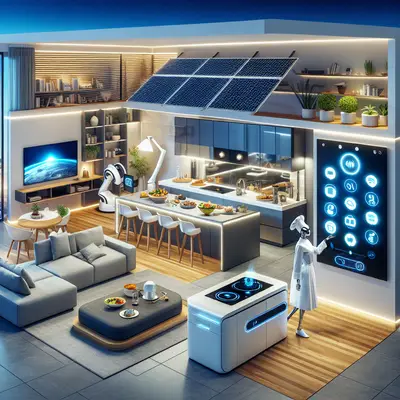
The smartest kitchens now feel calmer, not more chaotic. Instead of filling counters with one-trick gadgets, homeowners are leaning into integrated tech that actually streamlines cooking and cleanup.
Think induction cooktops that heat fast but stay cool to the touch, with built-in sensors that keep water from boiling over. Or ovens that can recognize certain foods and suggest cook times, so weeknight dinners feel less like guesswork. Smart faucets that turn on with a tap of your arm or a quick voice command are becoming the new normal in busy households.
Pantry and fridge organization is getting an upgrade too. Connected appliances can remind you when food is about to expire or when you’re running low on staples, which subtly cuts food waste and fewer frantic grocery runs. Pairing this with a shared family grocery app or smart display in the kitchen makes the space feel more like a command center than just a place to cook.
The modern move isn’t to buy every high-end gadget—it’s to choose a handful of built-in smart features that reduce friction, time, and decision fatigue.
4. Hybrid Work Corners That Disappear After Hours
The WFH desk in the dining room era is over. Today’s work-from-home setups are designed to appear and disappear as needed—mentally and visually.
Fold-flat desks with integrated cable management, wall-mounted monitors that double as digital art when not in use, and small under-desk treadmills or balance boards are all part of this new hybrid reality. A smart plug can cut power to your work devices at a set time each night, nudging you to actually disconnect.
Modern homeowners are treating these zones like micro-studios: good lighting for video calls, acoustics that keep sound from bouncing, and a neutral, design-forward backdrop. A compact smart speaker can double as a white noise machine during deep work sessions, and then flip to music for evening hangs.
The end goal: a workspace that feels productive at 10 AM and completely out of sight (or at least out of mind) by 7 PM—so your home doesn’t feel like you’re living in an office.
5. Wellness-First Bathrooms With Subtle Smart Layers
Bathrooms are quietly becoming mini wellness studios, and tech is playing a background role—supportive, not shouty.
Smart mirrors can adjust lighting for skincare, makeup, or shaving, and some even track air quality or humidity to help you spot patterns in your skincare or hair days. Heated smart towel racks and radiant floor systems can be scheduled to warm up before your morning shower, so the space feels like a spa without you touching a thermostat.
Water-focused tech is evolving fast: digital showers let you pre-set temperature and pressure (and save water with consistent control), while some smart toilets and bidet seats offer hygiene, comfort, and night lights that are surprisingly life-changing once you experience them.
Tie it together with a small smart speaker for meditations, playlists, or guided stretching, and a dimmable light scene for “evening unwind,” and your bathroom becomes less purely functional and more like a private reset zone tucked inside your home.
Conclusion
The most interesting home tech right now isn’t the flashiest—it’s the tech that disappears into your rituals and quietly makes life smoother, calmer, and a little more beautiful. From scent-based scenes to kitchens that think ahead for you, these upgrades are less about bragging rights and more about building a home that feels like it truly knows you.
Choosing a few intentional, human-centered tech layers will do more for your everyday life than cramming every room with screens. Start small, design around your real habits, and let the future of home living blend softly into the background.
Sources
- U.S. Department of Energy – Lighting Choices to Save You Money - Explains benefits of efficient lighting and how different types impact comfort and energy use
- Harvard Health – Blue light has a dark side - Details how light exposure affects sleep and circadian rhythms, relevant to smart lighting choices
- National Institute of Diabetes and Digestive and Kidney Diseases – Healthy Eating & Diet - Covers nutrition basics, supporting the value of smarter, more organized kitchens for better food habits
- Environmental Protection Agency – WaterSense Program - Provides information on water-efficient products, including fixtures used in smart bathrooms
- Mayo Clinic – Sleep tips: 6 steps to better sleep - Highlights how environment and routine impact sleep quality, aligning with wellness-focused home tech decisions
Key Takeaway
The most important thing to remember from this article is that this information can change how you think about Home Tech.