Smart homes aren’t just about talking speakers and color-changing bulbs anymore. The most interesting spaces right now feel less like tech demos and more like homes that know you a little bit better every day. Think: lighting that matches your energy, climate that anticipates your comfort, and small automations that quietly shave chaos off your routine.
Here’s how modern homeowners are using smart tech in ways that feel intuitive, stylish, and genuinely livable—with five innovative ideas that go way beyond “turn on the lights.”
Atmosphere on Autopilot: Mood-Responsive Lighting
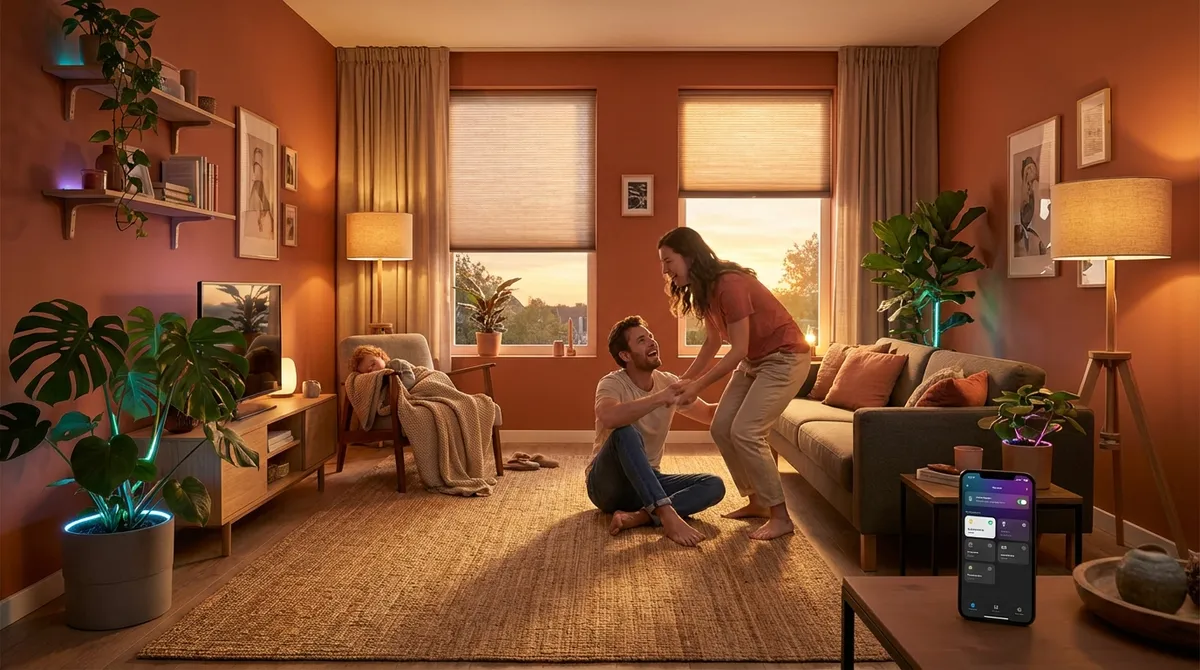
Lighting is no longer just “on” or “off”—it’s a background character that sets the tone of your entire day. Smart lighting systems can shift color temperature and brightness based on time of day, your calendar, or even your current task.
Imagine waking up to warm sunrise tones that gradually brighten instead of a harsh alarm. Mid-morning, the light cools to daylight white to keep you alert while working from home. By late evening, everything softens to warmer, candle-like hues that cue your body to wind down.
Paired with motion and ambient light sensors, your home can adjust itself in real time—gently brightening a hallway when you walk through at night or dimming living room lights when you hit play on a movie. The goal isn’t a disco of color, but a lighting “rhythm” that tracks your day without you needing to touch a switch.
Thoughtful homeowners are hiding smart bulbs in floor lamps, cove lighting, and behind headboards, so the tech disappears and the atmosphere takes center stage. It’s not about the gadget; it’s about how the room feels at 7 AM vs. 7 PM.
Intelligent Comfort: Climate That Learns Your Patterns
Thermostats used to be something you set and forgot. Now, they’re more like quiet co-pilots for your comfort and energy usage. Smart climate systems can learn when you’re home, when you’re out, and what temperatures you naturally gravitate toward.
Over time, your thermostat can build a schedule that feels almost psychic—warming up the bathroom a little before your usual shower, cooling the bedroom slightly before bedtime, or easing off the AC when your phone’s location says you’re not coming home till late.
Many homeowners are layering this with smart vents, ceiling fans, and shades so different rooms can have their own vibe. A sunny home office might auto-lower shades and switch on a fan mid-afternoon, while a north-facing bedroom stays cozy without wasting energy.
The modern flex isn’t blasting the AC all day—it’s having a home that feels consistently comfortable while quietly trimming your energy bill in the background. It’s climate control that feels both indulgent and responsible at the same time.
Kitchen That Thinks Ahead: Subtle Smart-Cooking Assist
The most interesting smart kitchens right now aren’t packed with giant touchscreens—they’re full of low-key, time-saving intelligence. Small sensors and quiet automations are turning the kitchen into a space that helps you cook and host without micromanaging every detail.
Smart ovens that recognize common dishes can adjust time and temperature so you’re not constantly checking and guessing. Induction cooktops with pan sensors cut the heat if a pot boils over or is left unattended. Connected scales and recipe apps can walk you through meals step by step, automatically adjusting quantities when you change serving sizes.
Even fridges are becoming more context-aware. Some can track temperatures in different zones, send alerts if a door is left open, or nudge you when certain ingredients are running low. Pair that with a voice assistant on the counter and you can add items to a shared grocery list the second you notice you’re out of something.
The result is a kitchen that feels more like a cooking partner than a collection of appliances—especially helpful for busy households where dinner is always squeezed between everything else.
Wellness-First Spaces: Air, Sound, and Sleep on Lock
“Healthy home” used to mean a comfy mattress and maybe a plant in the corner. Now, wellness is being baked into the infrastructure of the home itself, with smart systems quietly tuning what you breathe, hear, and feel.
Indoor air quality monitors can track pollutants, humidity, and temperature, then trigger purifiers, fans, or dehumidifiers as needed. Smart vents and filtration systems can respond to things like outdoor air quality reports or local pollen spikes, so your home stays a bit of a sanctuary, even when the outside air isn’t ideal.
Sound is getting the same treatment. Some modern homes use subtle soundscapes—soft white noise in bedrooms, quiet ambient tracks in work zones—to help with focus or sleep. Smart speakers can shift from productivity playlists in the morning to calming audio in the evening without you thinking too much about it.
Sleep is the final frontier here. Smart blinds that sync to sunrise, mattresses that track sleep quality, and bedroom lights that dim gradually at night aren’t just “nice-to-haves”—they’re becoming part of a wellness routine that lives inside your walls. It’s about having a home that quietly protects your energy and rest instead of fighting it.
Adaptive Security: Calm, Context-Aware Protection
Security used to feel like an on/off switch: alarms blaring or nothing at all. Now, the most livable systems are context-aware—they know when to watch closely, when to stay quiet, and how to keep you informed without constantly pinging your phone.
Smart locks give you keyless entry while letting you create temporary codes for guests, dog walkers, or cleaners. Cameras can distinguish between a known face, a package drop-off, or true suspicious activity, cutting down on false alerts. Geofencing can arm or disarm systems based on whether your household’s phones are in or out of range.
Some setups integrate with lighting and audio to make your home feel “alive” when you’re away—lights cycling, blinds shifting, even a speaker occasionally playing sound to mimic real activity. It’s a softer, more natural take on home security that doesn’t feel like living in a bank vault.
Modern homeowners are also getting smarter about data: choosing systems with end-to-end encryption, local video storage options, and clear privacy controls. It’s not just about feeling safe—it’s about feeling in control.
Conclusion
The smartest homes don’t feel futuristic—they feel oddly effortless. The tech fades into the background, and what you notice instead is the mood of your lighting, the consistency of your comfort, the ease of cooking, the softness of your sleep, and the quiet confidence of knowing your space is secure.
If you’re building or upgrading your own smart home, start with how you want your life to feel—more rested, more organized, more present—and then layer in tech that supports that feeling. The future of home isn’t louder or flashier. It’s more human.
Sources
- U.S. Department of Energy – Thermostats and Control Systems - Overview of how smart thermostats can save energy and improve comfort
- EPA – Guide to Air Cleaners in the Home - Explains indoor air quality concerns and how filtration and purification help
- Harvard T.H. Chan School of Public Health – Healthy Buildings - Research on how indoor environments impact health, sleep, and cognition
- Consumer Reports – Smart Home Devices Buying Guide - Independent testing and evaluations of major smart home categories
- National Institute of Standards and Technology (NIST) – Smart Home Cybersecurity - Guidance on keeping smart home devices secure and protecting privacy
Key Takeaway
The most important thing to remember from this article is that this information can change how you think about Smart Homes.