Smart homes aren’t just about gadgets anymore—they’re about how your day actually feels. The best tech fades into the background and quietly upgrades your routines: how you wake up, work, reset, host, and sleep. Think less “sci-fi showcase” and more “this just fits my life.”
Below, five innovative home living ideas that modern homeowners are leaning into—not to impress the internet, but to make every day run smoother.
1. Wake-Up Scenes That Feel Like a Soft Launch, Not an Alarm
The loud, jarring phone alarm is starting to feel…dated. Smart homes are shifting toward “wake-up scenes” that nudge you into the day instead of shocking you awake.
Imagine your bedroom shades slowly rising 20 minutes before your alarm, mimicking sunrise even in the dead of winter. Your lights warm from soft amber to daylight tones, your smart speaker fades in with a low-volume news update or a curated “morning reset” playlist, and your thermostat gently warms the room so getting out of bed doesn’t feel like punishment.
With smart bulbs, shades, and thermostats connected to a hub or voice assistant, you can build a wake-up sequence that matches your lifestyle—earlier and brighter on gym days, slower and calmer on weekends. Over time, this consistent light and temperature routine can support healthier sleep patterns, better mood, and smoother mornings, without you tapping a single button.
2. The Kitchen That Thinks in Meals, Not Just Appliances
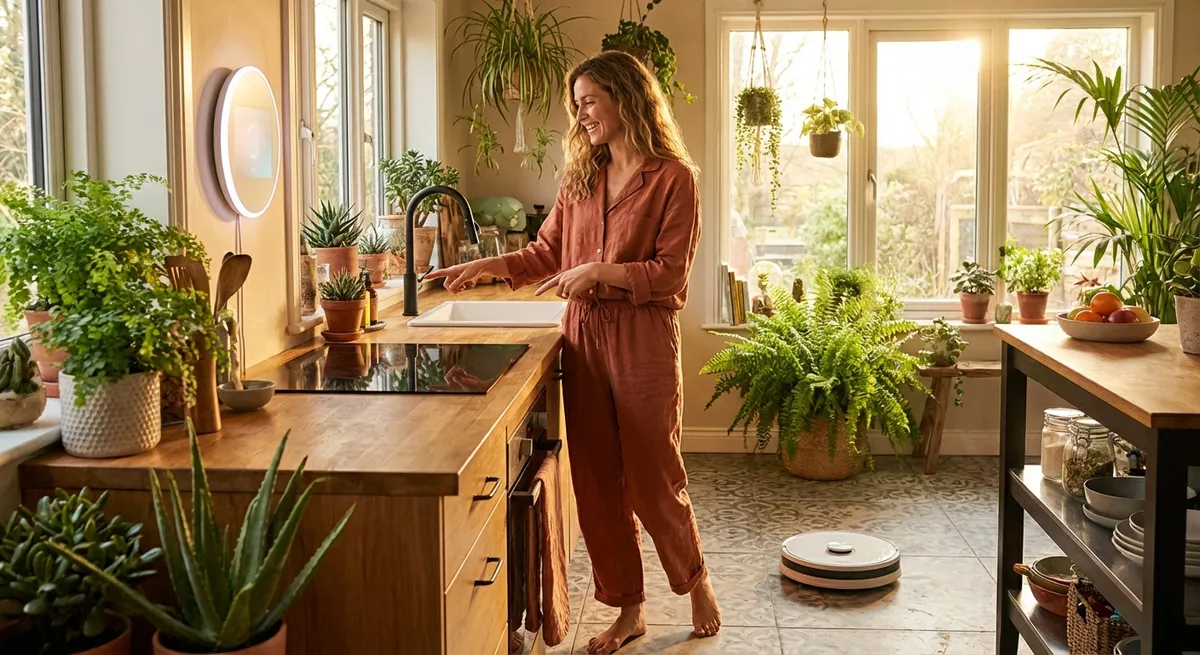
Today’s smartest kitchens are less about owning the fanciest appliances and more about having a cooking experience that feels intuitive and low-stress.
Smart ovens with internal cameras can recognize certain foods and suggest cook times or switch modes automatically. Induction ranges paired with connected cookware can prevent boil-overs or burned pans by controlling temperature precisely. Even more low-key: smart plugs on your existing slow cooker or coffee maker can sync with your schedule so dinner and “first cup” happen right on time.
Layer in features like connected fridges that let you peek inside from your phone, or apps that scan barcodes and track expiration dates, and you get a kitchen that quietly supports less food waste and more effortless meal planning. Recipe apps that integrate with smart ovens or scales can walk you through step-by-step cooking sessions, adjusting temperatures or timers so you’re less likely to wreck a meal—especially helpful for busy weeknights or if you’re experimenting with new cuisines.
3. A Work-From-Home Setup That Resets Itself
The “laptop at the dining table” era is fading. Modern homeowners are building smart work zones that adapt to their day and then disappear when work is done.
One popular move: lighting presets for “focus mode” and “off-duty.” During work hours, overhead lights brighten and desk lamps shift to cooler color temperatures to promote alertness on video calls. Once you’re done, a single voice command or tap warms the lighting and dims your workspace so it blends back into the rest of your home.
Paired with a smart sit-stand desk, motion sensors, and presence detection, your desk can remember your ideal height, suggest stretch breaks, or adjust lighting and blinds based on glare. Noise-cancelling smart speakers or smart sound machines can layer in ambient soundscapes, while smart locks and video doorbells help you manage package deliveries or visitors without derailing your flow. At the end of the day, powering down can be as simple as triggering a “shut office” scene: screens off, lights out, door locked, work mentally parked.
4. Mood-Based Lighting and Audio That Match Your Social Life
Hosting at home has gone from “turn on the big light” to curating a vibe. Smart homes make it easy to shift your space from solo unwind mode to full-on gathering without dragging lamps around or wrestling with tangled speakers.
Smart bulbs and light strips can wash walls in warm tones for an intimate dinner, or bring in vibrant colors for game nights and watch parties. Pre-set scenes like “Dinner,” “Movie Night,” or “After Hours” can adjust multiple rooms at once—dimming overhead fixtures, turning on accent lights, and closing shades for privacy.
In the background, whole-home audio systems let you move sound with you: mellow playlists in the kitchen that follow guests into the living room, or sync across multiple rooms for parties. Voice assistants or apps make it easy to switch gears mid-evening, going from lively playlists to soft, low-volume tracks as the night winds down. The result isn’t a “tech” experience; it’s a home that feels instantly ready for whatever kind of night you’re having.
5. Wellness-First Spaces That Track How You Actually Live
The newest smart home energy isn’t about maxing productivity—it’s about building spaces that care for you quietly in the background.
Smart thermostats can learn your patterns and adjust temperatures room by room, so your bedroom stays slightly cooler for sleep while your living area stays cozy. Air purifiers with connected sensors can monitor indoor air quality and kick on automatically during high-pollen days, wildfire smoke events, or heavy cooking sessions. Smart humidifiers can respond to real-time humidity levels, reducing dry skin, sinus issues, and static shocks in colder months.
Add in circadian lighting that shifts color temperature throughout the day to support your natural rhythms, along with smart blinds that let in just the right amount of natural light, and your home becomes an ally for your mental and physical health. Some homeowners even pair water sensors in bathrooms and basements with leak alerts, turning potential disasters into quick fixes—and protecting both their space and peace of mind.
Conclusion
Smart homes have moved past the “show-off gadget” stage. The real flex now is a home that quietly reads the room: supporting your sleep, smoothing your mornings, simplifying your workday, elevating your hosting, and protecting your wellbeing—without demanding your attention.
The most innovative ideas aren’t necessarily the most expensive; they’re the ones that genuinely improve the way you live. Start with one ritual you’d love to upgrade—your wake-up, your cooking flow, your work setup—and build from there. Over time, your smart home stops feeling like tech and starts feeling like…home, just more in-sync with you.
Sources
- U.S. Department of Energy – Thermostats - Explains how programmable and smart thermostats support comfort and energy savings
- Mayo Clinic – Sleep tips: 6 steps to better sleep - Covers how light, temperature, and routines can impact sleep quality
- Harvard Health Publishing – Blue light has a dark side - Details how lighting and screens influence circadian rhythm and wellbeing
- Consumer Reports – Guide to Smart Appliances - Provides an overview of how connected kitchen appliances work in real homes
- EPA – Indoor Air Quality - Breaks down why monitoring and improving indoor air can benefit health
Key Takeaway
The most important thing to remember from this article is that this information can change how you think about Smart Homes.