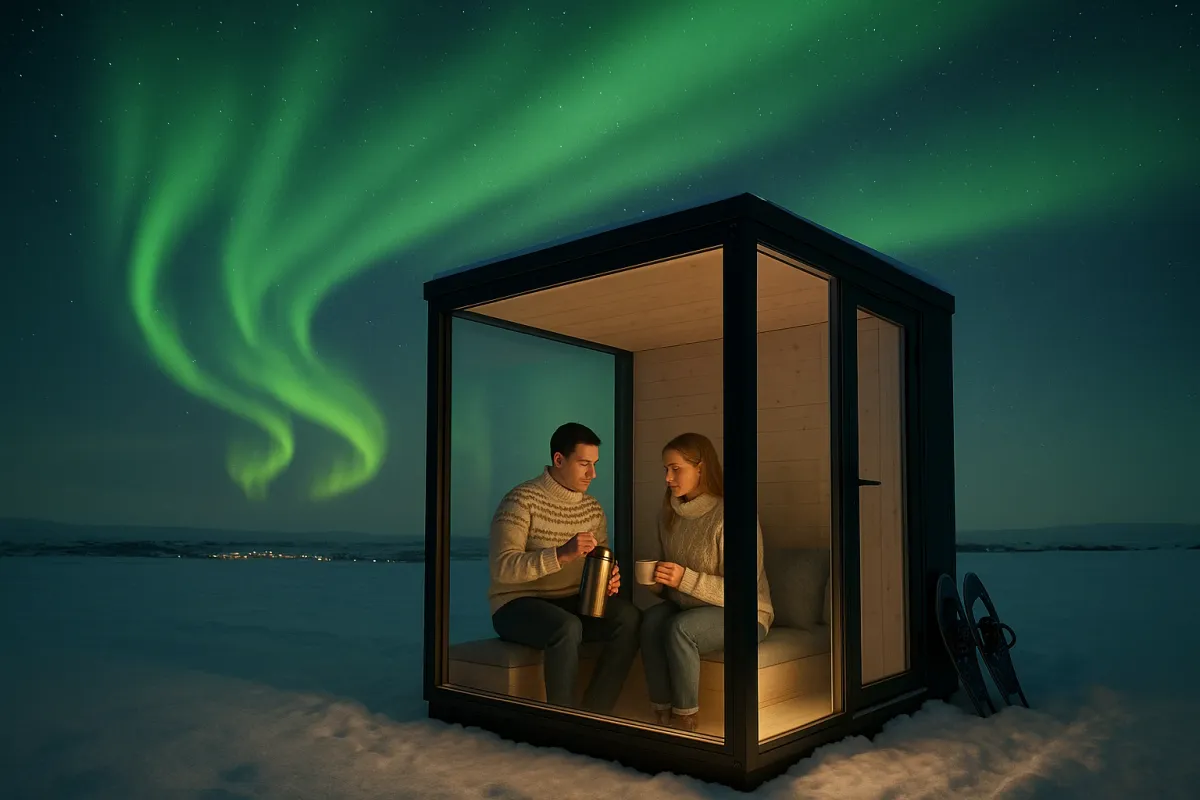
If you’ve opened TikTok or Instagram lately, your feed has probably been hijacked by the Northern Lights. With solar activity peaking, aurora tourism is exploding—from Norway and Iceland to remote corners of Canada and Finland. A recent feature on the best places and times to see the Northern Lights has everyone dreaming of glass igloos, off-grid cabins, and silent snowy landscapes lit only by the sky.
But beyond the FOMO and dreamy reels, there’s a bigger story here: people are traveling thousands of miles for a feeling they could be curating at home—slower, darker nights, less light pollution, more connection to nature, and spaces that feel like sanctuaries instead of storage units for our stress.
If the Arctic has become the mood board of the internet, here’s how to bring that “Northern Lights lifestyle” into your own home—without hopping on a plane, and with a seriously sustainable twist.
1. Dim the City, Not the Stars: Light-Pollution–Aware Home Design
One thing that makes trips to see the aurora so powerful? Darkness. Real, deep, can-actually-see-the-stars darkness. Light pollution is a huge part of why most of us never see the night sky at home—and it’s not just a vibe killer, it also wastes energy and disrupts ecosystems.
Take a cue from Nordic eco-lodges and rework your lighting to be both low-impact and atmospheric:
- Swap harsh ceiling lights for layered, low-level lighting (floor lamps, wall sconces, under-cabinet strips) using warm, energy-efficient LEDs.
- Install dimmers in key zones like bedrooms and living rooms for adaptable moods and lower energy use.
- Use blackout curtains at night to reduce light spill into the street and create that cocooned, aurora-viewing-lodge feel.
- Outdoors, switch to shielded, downward-facing lights with motion sensors. That means light only when and where it’s needed.
- Try “dark hour” at home: pick a nightly time window to shut off all unnecessary lights and screens. Candlelit reading, anyone?
You’ll cut your carbon footprint, sleep better, protect local wildlife, and maybe even catch a rare solar storm from your own yard if you’re in the right latitude.
2. Arctic-Inspired Thermal Design: Stay Cozy, Use Less Energy
The cabins in Northern Lights hotspots—from Finnish glass igloos to Icelandic geo-powered guesthouses—are masters of one thing: staying warm efficiently. With energy prices fluctuating and climate goals getting tighter, thermal performance is becoming a serious lifestyle flex.
Bring that smart coziness home:
- Focus on the building envelope. Seal drafts around windows, doors, and outlets. A weekend with weatherstripping, caulk, and foam gaskets can dramatically reduce heat loss (or AC loss in summer).
- Upgrade window strategy, not just windows. If full replacements aren’t in budget, use thermal curtains, insulated blinds, or cellular shades. In Nordic homes, heavy curtains are basically a design staple.
- Zoned heating and cooling. Use smart thermostats and room-by-room controls so you’re not heating unused spaces. Portable, efficient panel heaters or infrared heaters can target “cold corners” without cranking the whole system.
- Textiles as insulation. Layer rugs, throws, and fabric wall hangings. It’s not just aesthetic; they actually add a bit of insulation and reduce that chilly-radiant-wall effect.
- Passive solar thinking. During winter days, open south-facing blinds to let light heat your space; at night, close them to trap warmth—exactly what eco-lodges in aurora destinations do to cut energy use.
Instead of blasting your HVAC and hoping for the best, think like an Arctic designer: keep heat where you live, not where you don’t.
3. Off-Grid Aesthetic, On-Grid Reality: Micro-Resilience at Home
Aurora-focused cabins in places like northern Norway or Lapland often lean on off-grid or hybrid systems—solar, batteries, sometimes even micro-wind or geothermal. You may not be ready to disappear into the tundra, but you can absolutely borrow their resilience.
Build a “micro-resilient” home that quietly lowers your impact and keeps life flowing during outages:
- Start with demand, not gadgets. Before adding tech, reduce energy needs: efficient appliances, LED lighting, induction cooking, and a habit of actually turning things off.
- Home battery or smart backup. Even if full solar isn’t possible, a home battery (or smaller portable power station) paired with a priority-circuit setup can keep essential loads (Wi-Fi, fridge, a few outlets, LED lights) running.
- Balcony or yard solar. In many regions, plug-in “balcony solar” panels are trending—mini solar systems that feed into your home circuits and trim your electricity use without a full rooftop installation.
- Smart load shifting. Use timers and smart plugs to run energy-heavy appliances (dishwasher, laundry) during off-peak times or when your solar is generating the most.
- Resilient water habits. Rain barrels, low-flow fixtures, and dual-flush toilets don’t scream “off-grid,” but they’re exactly the kind of low-key resilience that makes remote Nordic cabins so efficient.
The goal isn’t to cosplay homesteader; it’s to make your everyday home feel less fragile, less wasteful, and more self-reliant—without sacrificing comfort or good design.
4. Slow-View Windows: Treat Nature Like the Main Feature
Look at the most bookmarked Northern Lights stays on Airbnb or Instagram: what do they all have in common? Massive windows, minimal clutter, and interiors arranged to worship the view. Even if you’re not living in the Arctic Circle, this mindset can reshape how your home feels—and how sustainable it is.
Design your own “slow-view” moments:
- Reorganize rooms around views, not TVs. Aim sofas, chairs, and desks toward windows, trees, courtyards, or even just the best slice of sky you have.
- Curate what’s visible from inside. Plant a small tree, trellis, or native greenery outside your main window. You’re creating a micro-viewing platform for birds, weather, and seasonal change.
- Go minimal on window clutter. Fewer knickknacks, more clear glass. Let natural light do the heavy lifting for mood and illumination.
- Create a dedicated stargazing or sky-watching spot. A chair, blanket, and low light near a window or balcony can become your “Northern Lights” ritual space—even if the sky is more city glow than aurora.
- Biophilic interiors. Indoor plants, natural materials, and neutral palettes echo that quiet, cabin energy you see in Scandinavian design—and are proven to reduce stress and improve well-being.
The more your lifestyle revolves around daylight, views, and nature cues, the less you rely on artificial lighting, constant entertainment, and energy-heavy “distraction” habits.
5. The Night Ritual Reset: Borrowing Nordic Calm for a Low-Impact Evening
Most Northern Lights chasers talk less about the actual 5 minutes of peak aurora and more about the waiting: long nights, thermos in hand, no phone signal, quiet. That slowness is exactly what many of us are missing at home—and it’s surprisingly aligned with sustainable living.
Rebuild your evenings to feel more like an aurora lodge than a doomscroll marathon:
- Set a screen sunset. Pick a nightly time when all high-energy devices (big TV, gaming PC, bright monitors) go off. Swap in books, playlists, or conversations.
- Warm, low-level lighting only. After a certain hour, switch to lamps at 25–50% brightness or candle-style LEDs. It’s good for circadian rhythm and cuts energy use.
- Analog comfort rituals. Think tea instead of late-night delivery, a hot water bottle instead of cranking the heat, or layering blankets rather than bumping the thermostat.
- “Weather check” habit. Step outside or onto a balcony for two minutes each evening. Look at the sky, feel the temperature, notice the air. It sounds small, but it rewires your brain to pay attention to the environment you actually live in.
- Journal the day, plan the footprint. A two-minute journal or notes app ritual to plan tomorrow’s sustainable choices (walking vs. driving, meal prep vs. takeout) can anchor greener habits more effectively than any smart gadget.
These tiny shifts don’t just lower your resource use—they make your home feel more intentional, more like a retreat than a recharge station between commutes.
Conclusion
The surge in Northern Lights tourism this season isn’t just about chasing a rare sky show—it’s a quiet protest against overlit cities, stressful routines, and homes that feel more transactional than tranquil. Those viral aurora trips are reminders that the way we live matters as much as where we go.
You don’t need a glass igloo in Lapland to tap into that energy. By rethinking how you light, heat, power, and emotionally “use” your space, you can build your own version of a low-impact, high-comfort sanctuary—right where you are.
Sustainable living isn’t just solar panels and compost bins; it’s a lifestyle that makes you want to stay home, dim the lights, and actually look at the sky.
Key Takeaway
The most important thing to remember from this article is that this information can change how you think about Sustainable Living.