Every home trend right now points to one big mood: people want spaces that work as hard as they do, but look like they’re barely trying. It’s not about a full gut-reno or chasing whatever’s going viral this week—it’s about layering in small, smart shifts that make your place feel more intentional, more livable, and a lot more you.
These five innovative home living ideas are all about quiet upgrades: design moves that slip into your everyday life and make it noticeably better, without shouting for attention.
1. The “Day to Night” Living Room That Shape-Shifts With You
Your living room shouldn’t be locked into one vibe. One of the most modern shifts in interior design is treating this space like a chameleon: one layout, multiple moods.
Start with a flexible foundation. Choose a modular sofa that can reconfigure—from movie night to reading corner to extra guest seating. Add a slim console on casters that can roll from behind the sofa to become a desk during work hours or a bar surface when you’re hosting.
Lighting is what really changes the game. Mix a floor lamp with a dimmer, a sculptural table lamp, and a directional sconce or two. Layer warm-toned bulbs (2700K–3000K) for evenings and pair them with sheer curtains that flood the room with natural light during the day. A neutral rug with subtle pattern helps visually anchor every version of the room, so it never feels chaotic—just quietly edited and intentional.
The goal: your living room shifts as your day does, without a full furniture shuffle every time.
2. Soft Zoning: Design First, Floor Plan Second
Instead of fighting your floor plan, design your way around it. “Soft zoning” is a subtle approach to carving out different functions in one open area—without building walls, buying room dividers, or turning your space into a furniture maze.
Think of it as visual boundaries. A textured rug under a dining table defines that zone, while a different rug style cues the lounge area. A low bookcase or bench behind a sofa creates a natural pause between spaces but keeps the sightlines open. Even changing materials—wood in one area, metal or stone accents in another—can gently separate functions.
Color blocking is another quiet-power move. Keep a shared base palette across the room (like warm whites and light woods), then assign accent colors by zone. Maybe the dining area has rust and oat-toned textiles, while the seating corner leans into sage and charcoal. Your eye starts to read each area as its own moment, without any hard breaks.
Soft zoning works especially well in smaller homes or apartments—your space feels bigger because it’s smarter, not busier.
3. The Display Edit: Turn Everyday Objects Into Design Moments
Instead of hunting for more decor, start by rethinking what you already own. Modern interiors are moving away from “styled just for Instagram” and leaning into real-life pieces as design elements.
Open shelving in the kitchen? Treat your most-used items like part of the look. Stack everyday plates in one clean pile, line up your favorite glasses in a row, and mix in one or two sculptural pieces (like a ceramic pitcher or a vintage bowl). Use matching jars or canisters for pantry staples and label them minimally—this keeps the shelf from reading as clutter.
In the living room, swap random small décor for fewer, bolder objects. A stack of art books, one strong candleholder, and a single interesting bowl on the coffee table looks more curated than ten tiny items vying for attention. On side tables, think in threes: a lamp, something sculptural, and something personal (like a photo, framed print, or small plant).
This approach also helps with visual calm. When everything visible is either functional, beautiful, or both, your home feels less like storage—and more like a space you chose on purpose.
4. Multi-Sensory Design: Styling for How Your Home Feels, Not Just Looks
The most memorable homes don’t just look good in photos—they feel different as soon as you walk in. Multi-sensory design is a rising approach in interiors that layers texture, sound, scent, and even temperature into the way you style your space.
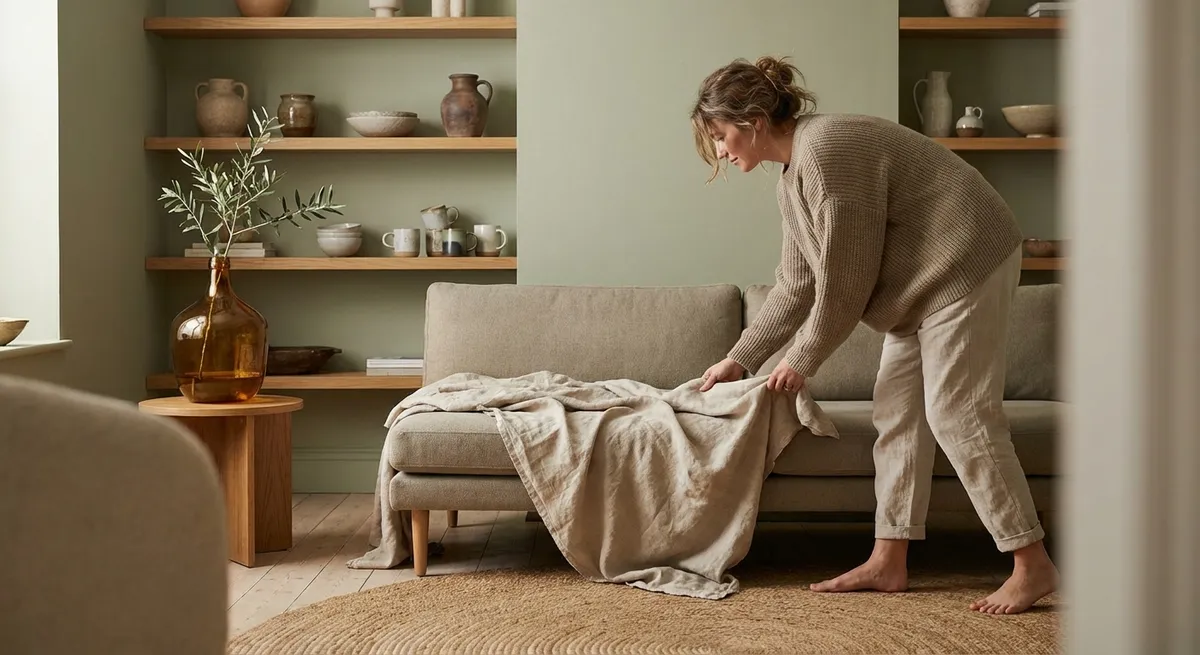
Think textures first. Combine smooth pieces (like leather, glass, and polished stone) with nubbier ones (bouclé, linen, wool, raw wood). A boucle chair next to a sleek metal side table and a linen curtain instantly feels more dimensional than a room full of similar finishes.
Sound matters too. Add a soft rug or runner in echo-prone areas, like hallways or open-plan living rooms. Textiles absorb noise, making your home feel calmer. If you listen to music or podcasts a lot, tuck a small, good-quality speaker on a shelf; it becomes part of the design when paired with books and a plant.
Scent is the most underrated design layer. Choose one or two consistent scents for your home—maybe something fresh and herbal in the kitchen and something warm and woody in the bedroom. Use candles, diffusers, or room sprays in the same family so each space flows together rather than competing.
Multi-sensory design doesn’t require big purchases—it’s often swapping one flat, over-polished element for something with more depth and presence.
5. Micro-Retreats: Carving Out Tiny Corners for Big Recharge
You don’t need a spare room to create a retreat; you just need a corner with intention. Micro-retreats are about building small pockets of calm or focus into your existing layout—mini environments that cue your brain to slow down, reset, or zoom in.
Start with what you crave most. If it’s reading, tuck a low chair or chaise near a window, add a clip-on or floor lamp, a small side table, and a single throw. If you’re into journaling or analog planning, a narrow wall-mounted desk with a comfortable chair and one drawer can become your daily reset zone.
For a wellness-driven corner, layer a soft mat or rug, a basket for yoga props or blankets, and a small shelf or stool for candles or a plant. Keep the color palette slightly softer than the rest of the room so this area instantly feels more relaxed.
The trick is to signal: “this corner is for this purpose.” A different material (like a corkboard, plaster-look paint, or wood slats) behind the area, a dedicated lamp, and one or two objects you only use there (journal, books, sketchbook, weights) help your mind associate that micro-space with whatever you’re building into your routine.
Conclusion
Modern interior design isn’t about starting over; it’s about upgrading how your home fits your life now. A living room that flexes with your day, zones that stay soft and fluid, everyday items turned into display, multi-sensory layers, and tiny micro-retreats—all of these are quiet shifts with big impact.
The best part: you can roll them out slowly. One corner, one shelf, one lighting update at a time. Before you know it, your place doesn’t just look more pulled together—it feels like a home that’s finally in sync with how you actually live.
Sources
- American Society of Interior Designers (ASID) – 2024 Trends Outlook - Industry report on evolving residential design preferences and lifestyle-focused spaces
- IKEA Life at Home Report - Global research on how people actually live at home and what they want from their spaces
- Harvard T.H. Chan School of Public Health – Healthy Buildings - Insights on how environmental factors like light, sound, and air quality affect well-being indoors
- U.S. Department of Energy – Lighting Choices to Save You Money - Guidance on lighting types, color temperature, and their impact on comfort and function
- NYTimes – Why Is Every Designer Suddenly Obsessed With Bouclé? - Context on tactile, texture-forward materials shaping contemporary interiors
Key Takeaway
The most important thing to remember from this article is that this information can change how you think about Interior Design.