Sustainable living doesn’t have to look like a cabin in the woods or a full-on “zero waste” challenge. It can feel like a calm, well-edited life where your home quietly does more with less—less energy, less waste, less visual noise. Think of it as a lifestyle upgrade that just happens to be better for the planet. These ideas are for people who like good design, love convenience, and want their space to feel current and conscious.
Rethink the “Stuff Flow”: Curated-In, Circulated-Out Homes
Most homes are designed as storage units; sustainable homes act more like well-run studios—everything has a role, and it’s in rotation.
Start by treating your home like an ecosystem instead of a container. Before anything new comes in, decide what cycles out (donation, resale, repair, swap). Create one “circulation zone” in your home—a shelf, bench, or cabinet near the entry—for items that are in transition: things to return, donate, lend, or sell.
Digitize what you can: manuals, recipes, notes, documents. Swap single-use decor hauls for a smaller collection of timeless, durable objects you genuinely love and move around seasonally. Lean into community: clothing swaps, neighborhood Buy Nothing groups, and local repair cafés keep your home fresh without a constant stream of new purchases. The result is a space that feels lighter, more intentional, and automatically more sustainable—because you simply own less, and use what you have more.
Design a “Low-Energy Luxury” Routine (Not Just Low-Energy Appliances)
Energy-efficient appliances matter—but how you use your home daily is where the magic happens.
Start with a “power-down rhythm.” Pick a nightly time where lights get dimmed, devices are unplugged or set to low-power mode, and the temperature is adjusted a couple degrees (up in summer, down in winter). Use warm, layered lighting—LED bulbs with dimmers, floor lamps, and task lights—so you’re not blasting every overhead fixture. It feels boutique-hotel cozy and slashes energy use.
Treat your thermostat like a quiet design tool. A programmable or smart thermostat can follow your actual life: cooler for sleeping, efficient while you’re out, comfortable when you’re home. In summer, combine fans with strategic shades or blackout curtains to reduce AC demand; in winter, lean into textiles—rugs, curtains, throws—to insulate and warm up the space. This isn’t about sacrifice; it’s about turning comfort into something smarter, calmer, and less wasteful.
Turn the Kitchen Into a No-Waste Lab (That Still Looks Good)
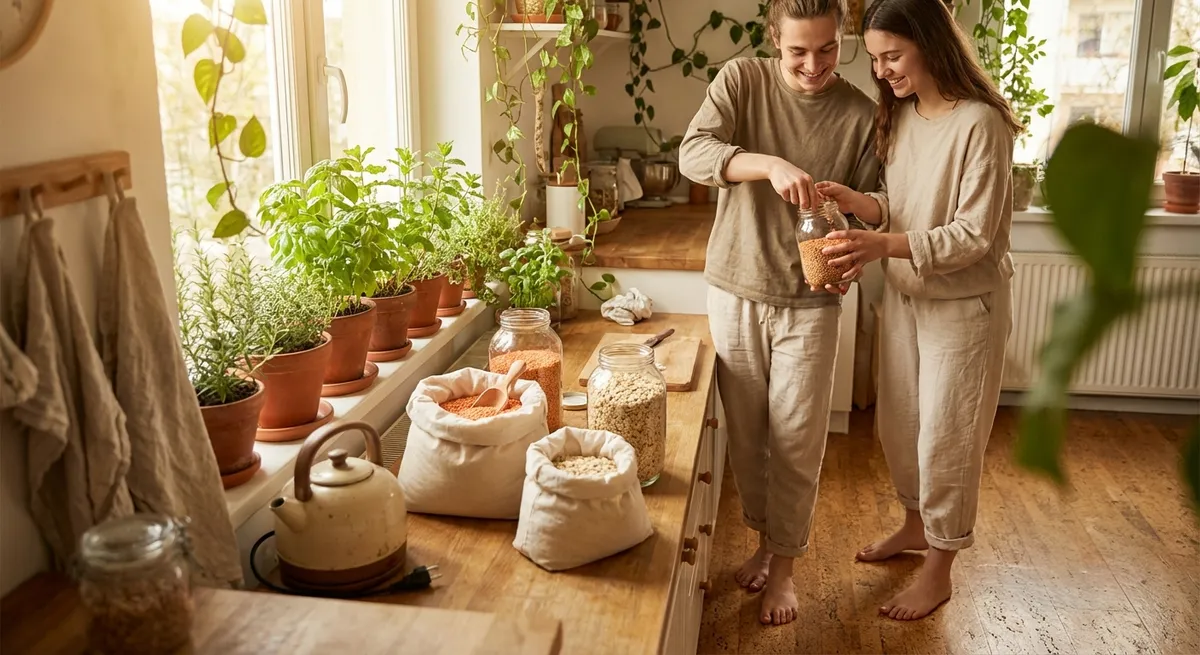
The kitchen is usually where sustainability feels the most real—and the most overwhelming. Instead of going “all in” on day one, build a quiet system that runs in the background.
Set up a compost solution that matches your space and lifestyle: a stylish countertop bin with compostable liners, a freezer container for food scraps if you’re worried about smells, or a balcony-friendly tumbler if you have outdoor space. Check if your city offers curbside composting or local drop-off. Designate one “eat me now” zone in your fridge (a clear bin, top shelf, or deli drawer) where leftovers and near-expiry items live, so they’re the first thing you see.
Swap a few high-impact single-use items—paper towels, plastic sandwich bags, disposable coffee pods—for reusable options that still feel elevated: glass containers, silicone bags, washable cloths, and a French press or pour-over setup. Layer in induction or efficient electric cooking if you’re renovating; it cuts energy use and reduces indoor air pollution compared to gas. The goal: a kitchen that feels modern, streamlined, and quietly efficient, where food and energy don’t get casually wasted.
Bring the Outdoors In (Strategically, Not Just Aesthetically)
Plants and natural materials aren’t just a vibe; they’re part of a more sustainable home ecosystem when you use them intentionally.
Start with air-purifying, low-maintenance plants—snake plants, pothos, ZZ plants, and peace lilies are good entry points. Cluster them where you spend the most time: by your desk, in the living area, near your bed. Pair them with simple, long-lasting planters rather than trendy, disposable decor. If you have a balcony, stoop, or small yard, experiment with a compact edible setup—herbs, salad greens, strawberries in containers. Growing even a tiny portion of your food deepens your connection to what you consume and reduces packaging.
Inside, use natural, durable materials where it counts: wool or cotton rugs, linen or cotton bedding, wood or rattan furniture, and fewer synthetic, plastic-heavy pieces. When you do buy new, look for certifications (like FSC for wood) and timeless silhouettes so each piece has a long life. This approach turns “nature-inspired” from a trend into a lifestyle: your home feels grounded, breathable, and less dependent on fast, disposable decor.
Make Repair and Reuse Feel Chic, Not Like a Downgrade
A truly sustainable home doesn’t just buy “eco” products; it builds a culture of keeping things going.
Create a small, curated “repair kit” for your lifestyle: fabric shaver, basic sewing kit, wood polish or touch-up markers, super glue, picture-hanging tools, and a simple toolkit. Store it in an aesthetically pleasing box or basket so you’re more likely to use it. When something chips, tears, or wobbles, your default becomes “fix” before “replace.”
Lean into reimagining instead of discarding: turn a dated dresser into a bathroom vanity, paint or re-stain a tired dining table, reupholster dining chairs in a fresh fabric. Vintage and secondhand furniture can be elevated with new hardware and a good clean. Share the story—on social or with friends—of your “saved” pieces. When repair and upcycling are framed as creative wins and design flexes, not budget compromises, sustainability starts to feel aspirational instead of restrictive.
Conclusion
Sustainable living at home isn’t about perfection; it’s about designing a lifestyle that quietly aligns with your values day after day. When your space is set up to circulate what you own, use less energy without sacrificing comfort, waste less food, tap into nature, and extend the life of what you love, your home becomes more than a backdrop—it becomes a partner. The future of eco-living isn’t loud or performative. It’s the quietly modern home that feels good to live in now and still makes sense years from today.
Sources
- U.S. Department of Energy – Energy Saver - Practical guidance on home energy efficiency, lighting, heating, and cooling
- Environmental Protection Agency – Sustainable Management of Food - Data and strategies for reducing food waste in homes and communities
- Harvard T.H. Chan School of Public Health – Indoor Air Quality - Research on how indoor environments, including cooking and ventilation, affect health
- FSC – Forest Stewardship Council - Information on responsibly sourced wood products and certifications for sustainable furniture and materials
- Buy Nothing Project - Example of hyper-local, gift-based communities that support reuse, sharing, and reduced consumer waste
Key Takeaway
The most important thing to remember from this article is that this information can change how you think about Sustainable Living.