The most interesting home tech right now doesn’t scream “futuristic gadget.” It feels soft, invisible, and woven into the way you already live. Think less “sci-fi showroom,” more “quietly dialed-in lifestyle” that just works better in the background. If you’re updating your space in 2026, the goal isn’t owning the most devices—it’s curating the ones that genuinely make mornings calmer, nights cozier, and everything in between a little more seamless.
Below are five innovative ideas that modern homeowners are leaning into—not as showpieces, but as everyday upgrades that change the way home feels.
1. Adaptive Lighting That Follows Your Day, Not Just a Schedule
Traditional “smart bulbs on a schedule” are over. The next wave is adaptive lighting systems that track your rhythms, the weather outside, and even your screen time to create healthier, more natural light indoors.
Instead of one brightness fits all, these systems shift color temperature and intensity throughout the day—cooler, crisper light when you need to focus, warmer and softer as evening settles in. Some setups sync with sunrise and sunset, others respond to occupancy, and the best ones allow you to set “modes” like deep work, dinner, or slow Sunday that instantly transform the room.
Well-designed adaptive lighting doesn’t look techy. It hides in recessed fixtures, floor lamps, and pendants you’d pick anyway. The impact is subtle but real: better sleep hygiene, less eye strain, and spaces that feel different without moving a single piece of furniture.
2. Zoned Soundscapes Instead of a Single Speaker
The modern home is no longer built around one big speaker in the living room. Zoned audio lets you treat sound like lighting: tailored, layered, and specific to each area of your home.
Imagine: a calm ambient playlist in the bathroom while you shower, a podcast following you from kitchen to hallway, and a “no audio” rule in your workspace to stop your focus from leaking into the rest of the house. With multi-room systems, you can create audio “zones” that match how you actually live—cozy listening corners, energetic kitchen vibes, quiet bedrooms.
The key is choosing hardware that disappears visually: in-ceiling speakers, slim soundbars that blend into the TV, or minimal wireless speakers that look more like decor than tech. The result is less about loudness and more about mood, shaping the feel of each space without visual clutter.
3. Intelligent Climate Layers: Beyond Just a Smart Thermostat
The smart thermostat was just the opening act. The real comfort upgrade comes from layering climate tech so your home feels consistent, breathable, and tuned to how you move through it.
Think: smart vents that open and close room by room, zoned heating and cooling so the bedroom can be cool while your office stays warm, and sensors that track humidity and air quality as much as temperature. Some systems now tap into weather data and your utility’s peak pricing times, subtly pre-cooling or pre-heating your home to use less energy while keeping things comfortable.
Add in quiet ceiling fans linked to your climate system, window shades that automatically close during the hottest part of the day, or even localized heating elements (like smart heated floors in high-use areas), and you shift from “one temperature for the whole house” to a climate that feels custom without constant tweaking.
4. Invisible Charging Everywhere You Actually Live
We’ve moved past the era of one overloaded outlet by the sofa. The new standard is integrated, invisible power that’s exactly where you need it—without cables snaking across every surface.
Modern homeowners are building charging into the architecture of daily life: wireless charging pads tucked into side tables and nightstands, USB-C outlets by the breakfast bar for quick laptop top-ups, and slim charging ledges in entryways where your phone, earbuds, and keys land the second you come home. Some kitchen counters now offer built-in induction pads for compatible devices, while desks with integrated power strips keep work zones visually clean.
What makes this feel elevated isn’t the tech itself, but the restraint: one clean, intentional charging area per zone rather than chargers thrown everywhere. The result is less visual noise, fewer low-battery panics, and a home that quietly anticipates what your devices need before you even reach for a cable.
5. Scene-Based Living: One Tap That Shifts the Whole Mood
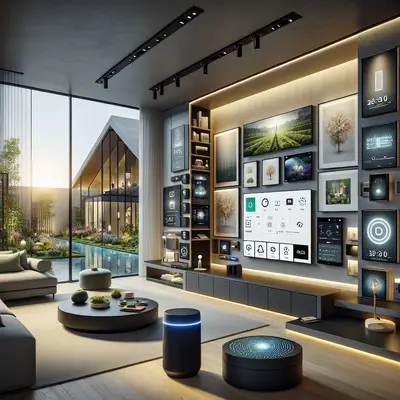
Instead of controlling your home device by device—lights here, blinds there, music over there—scene-based living lets you bundle everything into one mood-ready move. One tap (or voice command) and the whole space responds.
A “Reset” scene might open the blinds, turn on soft white lighting, queue a low-fi playlist, and set the thermostat a few degrees cooler to wake you up. “Hosting” could dim lights, turn on the kitchen pendants, start your go-to playlist, and warm up the dining area. “Off-duty” might lower shades, reduce blue light across fixtures, and switch on a single lamp in the reading corner.
The magic is in designing scenes that reflect your actual life, not stock presets. Think less “Movie Night” and more “Sunday catch-up,” “Kids’ wind-down,” or “Late work sprint.” Over time, scenes become rituals—micro routines that pull you into the right headspace with almost no effort, making home feel curated instead of chaotic.
Conclusion
Smart home tech is finally moving past the novelty phase. The most interesting setups now are soft, almost invisible—shaped around your routines, not around the hardware. Adaptive lighting, zoned audio, layered climate control, invisible charging, and scene-based living all have one shared goal: less friction, more feeling.
You don’t need a fully wired, top-to-bottom system on day one. Start with the space you use the most—maybe your living room or bedroom—and layer in one idea at a time. When the tech disappears into the background and your home just feels easier, calmer, and more “you,” that’s when you know you’ve got it right.
Sources
- U.S. Department of Energy – Lighting Choices to Save You Money - Overview of efficient lighting options and how they impact comfort and energy use
- Harvard Health Publishing – Blue light has a dark side - Explains how light exposure affects sleep and circadian rhythms, supporting adaptive lighting concepts
- U.S. Environmental Protection Agency – Indoor Air Quality - Details on why monitoring air quality and humidity at home matters
- ENERGY STAR – Smart Thermostats - Guidance on how smart climate controls can improve efficiency and comfort
- BBC Future – The psychological power of music in everyday life - Insight into how sound and music shape mood and daily experience
Key Takeaway
The most important thing to remember from this article is that this information can change how you think about Home Tech.