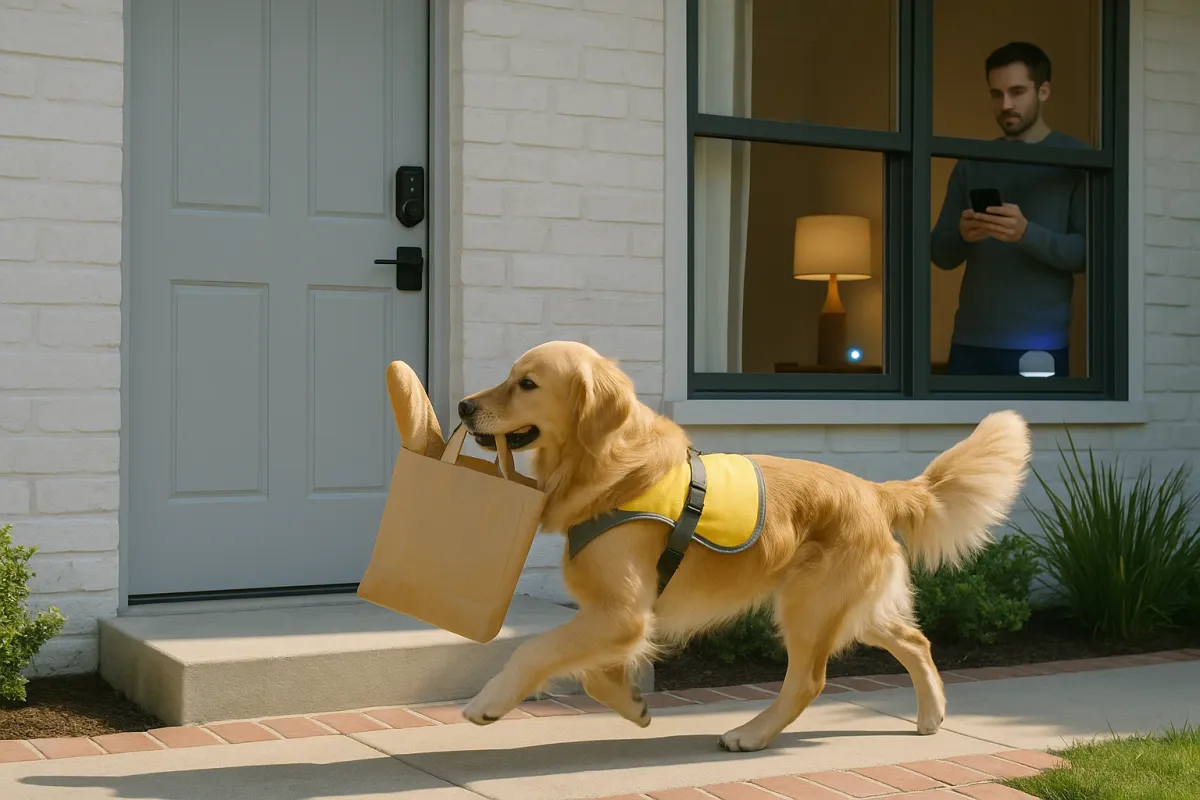
There’s a Twitter thread blowing up right now where pets are “collecting” deliveries—grabbing parcels from porches, dragging in bubble mailers, proudly trotting around with packages like they own Amazon. It’s hilarious, chaotic, and very, very 2025. But underneath the cute photos and viral captions, there’s a bigger story: our homes are already halfway to being smart logistics hubs—and our pets are accidentally beta-testing the system.
As online shopping, same‑day shipping, and micro-deliveries keep ramping up, the front door has quietly become the busiest “room” in the house. From smart locks and camera doorbells to AI-powered security and in-garage drop-offs from Amazon and Walmart, big players are racing to make the last 5 meters of delivery smarter, safer, and… less awkward. Those pets proudly dragging in packages? They’re basically the analog version of what smart homes are about to automate completely.
So let’s take that viral “pets collecting packages” moment and flip it into something useful: what would a home look like if it was actually designed for the way we live (and shop) right now?
1. The Smart Delivery Foyer: Your “Offline Inbox” At Home
The surge in pet‑delivery pics highlights one thing: packages are just… everywhere. On porches, in hallways, under dining tables because you “haven’t opened them yet.” Smart homes are starting to treat deliveries like emails—with a real‑world inbox built into your house.
Think: a small, temperature‑controlled, lockable delivery vestibule—either built into the wall by your front door or integrated into your garage. Carriers can access it via one‑time digital codes or verified app credentials (the same way Amazon Key and some grocery services already do). Inside, smart shelves and sensors can tell you what arrived, how long it’s been there, and if it needs refrigeration.
Layer on a camera and AI: your system could auto‑tag deliveries (“groceries,” “cosmetics,” “returns”), ping you if something perishable has been sitting too long, and even sync with your shopping apps to check off what was actually delivered. Instead of pets running off with packages, you’d basically have a mini logistics center baked into the architecture of your home.
2. AI‑First Security That Knows The Difference Between “Dog With Box” And “Stranger At 2AM”
In those viral photos, pets dragging packages inside are adorable because we know they’re safe. Your dog isn’t stealing your stuff—he’s just thrilled he caught something. Smart homes are finally catching up to that level of context.
Modern security cameras from brands like Google Nest, Ring, Eufy, and Arlo are already pushing person/pet/vehicle detection. The next wave is AI that understands behavior:
- A familiar courier following a verified access routine
- Your dog moving a box inside (not a stranger taking one away)
- A neighbor dropping off something vs. a loitering unknown visitor
Imagine getting fewer notifications—but way smarter ones. Instead of “Motion detected,” you’d see: “Delivery driver placed package in smart box, door relocked,” or “Dog brought small package indoors—no human detected.” Your system can escalate only when behavior breaks the pattern you’ve set, not every time a leaf blows by.
This context-aware layer makes smart homes feel less like you’re living in a surveillance system and more like you’re living with a genuinely attentive, low‑drama digital concierge.
3. The “Soft Lock” Home: Flexible Access Without Handing Out Keys
The delivery chaos we’re all watching online is partly a sign of something else: our homes need more flexible boundaries. Between dog walkers, cleaners, guests, food deliveries, package drop‑offs, and sitters, the old “spare key under the mat” has quietly died—and smart access is replacing it.
A “soft lock” home mixes physical locks with digital, revocable, time‑bound access. Here’s what that looks like in practice:
- Your dog walker has a recurring 11am–1pm door code that only works on weekdays.
- A one‑time QR code for today’s grocery drop‑off opens only the delivery vestibule or garage—never the whole house.
- Your cleaner’s code auto‑disarms the alarm only in specific rooms and only during their scheduled window.
- You can tap “Emergency Access” in your app to temporarily let a neighbor in if something goes wrong while you’re away.
All of this already exists in pieces across platforms like August, Yale, Schlage, Level Lock, and various smart alarm systems. The next step: actually designing your home’s layout around different “access zones,” so the tech feels natural. Guests can enter the social zones, services enter utility zones, and private spaces remain truly private—without you constantly playing gatekeeper.
4. Adaptive Lighting That Matches Your Real Life, Not Just Sunrise/Sunset
Those photos of pets proudly posing with deliveries usually share one more thing: terrible hallway lighting. A lot of “smart lighting” right now is just scheduled bulbs and color tricks. But we’re finally starting to see something smarter emerge: adaptive, data‑aware lighting that responds to how you live, not just what time it is.
Picture this:
- Your entryway lights automatically brighten to a neutral white when it detects a delivery, cleaning crew, or guest entry—clear, flattering, camera‑friendly.
- Your living room subtly shifts to warm, low‑blue light when your calendar flips to “Do Not Disturb” or your wearable detects you’re stressed, turning your home into a decompression zone, not a second office.
- Late‑night fridge runs trigger minimal, floor‑level pathway lighting—enough to walk, not enough to fully wake your nervous system.
Companies like Nanoleaf, Philips Hue, Govee, and LIFX are starting to lean into scenes triggered by sensors and routines, but the most interesting setups combine them with health tech (think smartwatches, sleep tracking) and calendars. Your home becomes aware of your energy, not just lit on a timer.
The result: your space is less “always on” and more “always in tune.”
5. Quiet Automations That Eliminate Tiny Daily Frictions
The delivery‑collecting pets going viral are a reminder of how much micro‑friction we tolerate at home: carrying in boxes, breaking them down, tossing packaging, putting things away. Smart homes work best when they quietly erase those little hassles instead of adding new ones.
Imagine a home built around “micro‑automations”:
- Your delivery vestibule weighs and scans packages, then suggests where they should go: pantry, bathroom, office, closet.
- Smart cabinets unlock or highlight with subtle interior lighting when you’re putting similar items away for the first time (“Skincare this way,” “Snacks here”).
- A cardboard bin with a built‑in sensor logs when you’ve accumulated enough to justify recycling pickup, then recommends a time window that fits your schedule and local services.
- A “reset” scene button by the front door starts a whole‑house calm-down: turns off delivery notifications, closes shades, dims lights, and activates a playlist so your home mentally clicks from “incoming” to “unplugging.”
None of this needs to feel futuristic or cold. The best smart homes in 2025 don’t scream “tech”; they disappear into your routines. The only sign they’re working is that your day feels smoother—and your porch no longer looks like a distribution center.
Conclusion
Those trending “my pet brought in my package” posts are cute, but they’re also a preview. Our lives are now permanently hybrid: part‑physical, part‑digital, part‑same‑day‑shipping. The homes that feel the most modern aren’t the ones with the loudest gadgets—they’re the ones that quietly reshape around how we actually live, shop, work, and unwind.
From smart delivery foyers and AI‑aware security to soft‑lock access, adaptive lighting, and friction‑free routines, the real flex isn’t a touchscreen fridge. It’s a home that feels like it understands you—and doesn’t need your dog to manage logistics at the front door.
Key Takeaway
The most important thing to remember from this article is that this information can change how you think about Smart Homes.