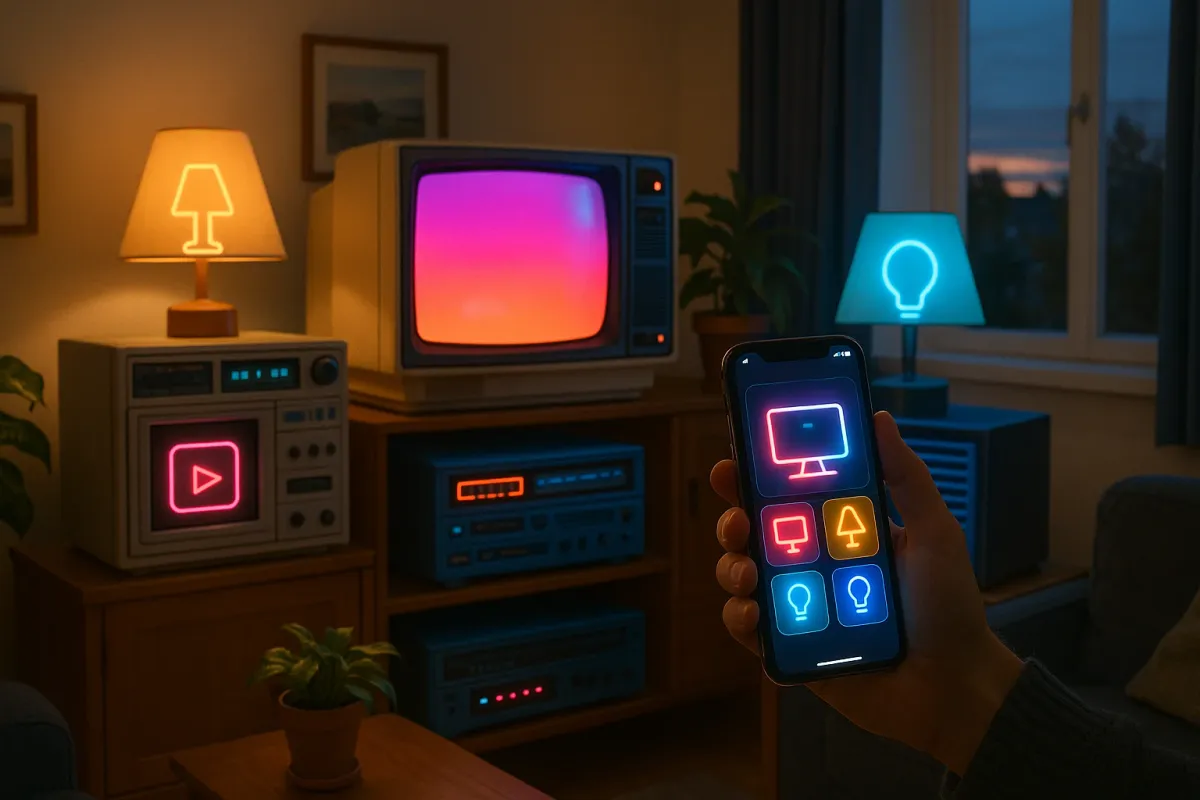
There’s a wildly nostalgic art series trending right now where designer Luli Kibudi reimagines today’s biggest apps as if they were made in the 1980s—think chunky plastics, cassette-style Spotify, and VHS-era Netflix. It’s a reminder of how fast tech evolves… and how different our homes feel when our devices are actually designed to be fun, beautiful, and intuitive. That same energy is quietly reshaping smart homes in 2025: less dystopian “robot house,” more curated lifestyle ecosystem that looks good on your feed and feels good IRL.
As retro-futuristic visuals go viral on Instagram and X, brands like Apple, Google, Samsung, and even IKEA are racing to make connected living less about specs and more about vibes. Your home isn’t just getting “smarter”—it’s becoming more cinematic, more mood-based, and more “you.” Inspired by this 80s-meets-2025 design moment, here are five smart-living ideas that take cues from what’s trending online right now—and turn your place into the kind of home that feels ready for a photoshoot at any moment.
1. Scene-First Living: Turn Your Home Into A Playlist, Not A Control Panel
The big shift in smart homes right now? People don’t want to micromanage every bulb and plug—they want scenes. Instead of asking Alexa to turn on six different lights, you say “Movie Night” and your space just… transforms. Philips Hue, Nanoleaf, and Govee are pushing this hard with scene-based lighting, and Apple’s revamped Home app in iOS 18 leans into ready-made “Good Morning,” “Wind Down,” and “Away” modes.
Borrowing from Kibudi’s 80s app aesthetic, the trend is toward bold, recognizable scenes you can set and forget. Think color-drenched bias lighting behind the TV, warm pockets of light in reading corners, and subtle motion-activated strips along baseboards at night—no ugly wall of switches. For renters, smart plugs plus a few app-connected lamps can build the same vibe without rewiring. The key: stop thinking in “devices” and start thinking in “moments,” then build your tech around the moods you actually live in.
2. Aesthetically Loud, Technically Quiet: Smart Tech That Earns Its Shelf Space
That viral 1980s-app series hits because the gadgets look fun—you want them on your desk. Smart home brands are slowly catching on: we’re over boring black boxes. From Samsung’s The Frame TV to IKEA’s SYMFONISK lamp-speaker collab with Sonos, devices are disguising themselves as decor. Even routers (TP-Link’s Deco, Google Nest WiFi Pro) now come in sculptural, pastel-friendly forms meant to sit out, not hide.
In 2025, forward-thinking homes treat tech like accessories, not intruders. Swap out harsh plastic smart switches for minimal keypads or retro-feel toggles that still talk to your hub. Choose smart speakers that match your interior style—wood finishes, fabric textures, or that soft, 70s-leaning beige everyone’s reposting. The goal is simple: every connected object should either disappear into the space or be so good-looking it deserves a place in your grid.
3. “Soft Security”: Subtle Safety That Feels Less Like a Fortress, More Like a Friend
The days of aggressive, blinking security cameras dominating the front door are numbered. As more people share apartment tours and entryway selfies, they want safety gear that doesn’t kill the aesthetic—or the vibe. Companies like Ring, Google Nest, and Arlo are already rolling out smaller, softer-looking devices; Matter-compatible sensors are shrinking to almost invisible.
Modern homeowners are layering what could be called “soft security”: a discreet doorbell cam, low-profile window sensors, smart locks that look like designer hardware (August and Level are leading here), and quiet occupancy sensors that double as motion-based lighting triggers. Bonus: these setups aren’t just about intruders—they also watch for water leaks, smoke, and even poor air quality. It’s a shift from “protection as panic” to “protection as peace of mind,” and it blends into your curated entry tables, gallery walls, and cozy corridors instead of hijacking them.
4. Hybrid Work 2.0: Your Home Office Becomes a Studio-Ready Smart Zone
Remember when a “home office” was just a laptop at the dining table? Now, with remote and hybrid work here to stay, people are turning small corners into fully optimized, camera-ready smart zones. Influencer-style setups—clean backdrops, flattering lighting, zero clutter—are driving demand for better home tech that quietly does the heavy lifting. Think Elgato-style key lights, Nanoleaf light bars behind your monitor, and smart blinds that kill midday glare with a single tap.
Major platforms know this: Zoom, Teams, and Google Meet all rolled out improved lighting and background features, but the real power move is upgrading the room itself. A smart power strip under your desk can turn your “work rig” on and off with one voice command. Air purifiers with app control prep the space before a long call. Noise-sensing smart speakers can auto-lower your music when you join a meeting. Taken together, your office nook feels less like a compromise—and more like a personal content studio that works just as hard for spreadsheets as it does for side hustles.
5. Ritual-Based Automation: Tiny Tech Habits That Make Your Place Feel Like A Boutique Hotel
The most interesting smart-home trend in 2025 isn’t a new gadget—it’s a new mindset: designing automations around rituals instead of routines. Routines are rigid (6:30am alarm, lights on). Rituals are more human (slow Sunday coffee, post-gym reset, pre-dinner wind-down). TikTok and IG are full of “night reset” and “Sunday tidy” videos, and people are quietly wiring their spaces to support those moments.
You might set a “Home from Work” shortcut on your phone or Apple Watch that unlocks the door, turns on a single warm lamp, starts your favorite chill playlist on a smart speaker, and bumps the thermostat a couple of degrees warmer. Or a “Kitchen Reset” button that starts the dishwasher, dims the overheads, and turns on an under-cabinet strip to a low amber glow. Smart plugs on your kettle or espresso machine can prep hot water or power on the machine at your usual wake-up window, not a fixed time. It’s less about chasing full automation—and more about sprinkling just enough tech on your rituals that home feels curated, intentional, and a little bit like checking into your favorite boutique stay.
Conclusion
As nostalgic takes on 1980s tech trend across social feeds, they’re quietly shaping what we expect from our own spaces: bolder design, softer edges, and smarter systems that feel more like a lifestyle upgrade than a wiring diagram. Today’s best smart homes aren’t the most high-tech—they’re the ones that blend scenes, aesthetics, safety, work, and daily rituals into something that feels effortlessly “you.”
If your current setup feels more “gadget graveyard” than curated haven, start small: one scene, one beautifully designed device, one ritual you’d love to automate. From there, you’re not just adding tech—you’re designing a home that keeps up with your life, your feed, and your future self.
Key Takeaway
The most important thing to remember from this article is that this information can change how you think about Smart Homes.